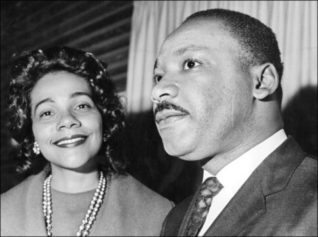
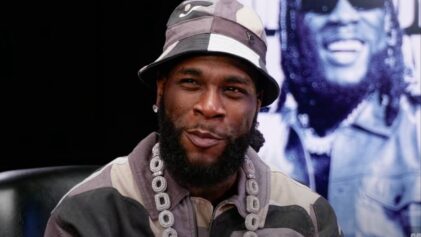
The late actors and activists Ruby Dee and Ossie Davis had a street in Harlem, N.Y, named after them on Saturday.
The honor was spearheaded by The Dwyer Cultural Center (DCC), which is also located in the uptown section of Manhattan. And now the northeast corner of 123rd and Saint Nicholas Avenue now reads Ruby Dee Place and Ossie Davis Way.
Besides the street naming ceremony, DCC also opened a gallery exhibit on the legendary actors that honored some of the work they’ve done to help artists of color. Their longtime friend Cliff Frazier, who founded the DCC with Dee and Davis, will also be part of the display for the work he’s done.
“We are very humbled by this recognition not only of our parents’ contribution to the arts, but also to their unwavering commitment to Harlem, the people and to the Civil Rights Movement,”wrote the actor’s children Guy Davis, Nora Davis and Dr. Hasna Muhammad.
“We thank The Dwyer Center, Councilman Perkins, the staff at District 9 and Community Board 10, and everyone who worked to get this done,” they added.
Dee, born in Harlem and Davis in Cogdell, Clinch County, Ga, were just as involved in social justice as they were the arts, and they became close with Martin Luther King Jr, as well as Malcolm X.
Dee was even an MC for the March on Washington in 1963, and Davis gave the eulogy at X’s funeral in 1965.
On top of that, Dee and Davis helped to start Harlem’s Community Film Workshop Council, Third World Cinemas and the Institute of New Cinema Artists along with Frazier, Harry Belafonte and Sidney Poitier.
“Three years ago, our Executive Director Minerva Diaz came to me with an idea about the street naming(s) to honor my dear friends. And after a long and tedious process it’s done,” said Frazier.