According to a new survey, Black young adults are more likely to drop out of Protestant churches during their early adult years compared to their white counterparts.
However, equal percentages of Black and white millennials said they now regularly attend church.
A recent analysis of survey data by the Nashville-based LifeWay Resources found that 66 percent of American young adults who regularly attended a Protestant church for at least a year in high school also stopped going for at least a year between the ages of 18 and 22. Of those young adult worshipers, 74 percent were African-American while 65 percent of whites said they also halted their regular churchgoing.
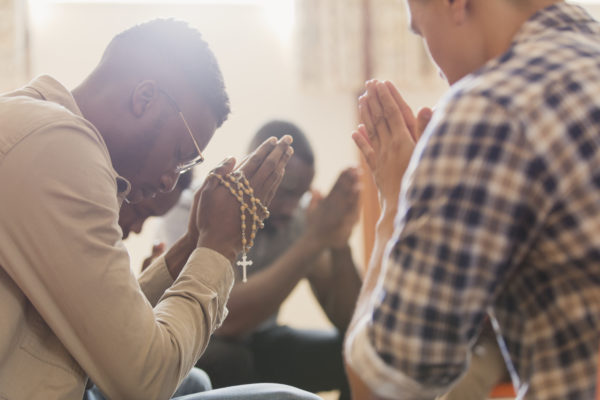
According to the survey, 44 percent of Black and white young adults who regularly attended Protestant church for more than a year in high school currently attend church at least twice a month. (Tom Merton / Getty Images)
So what’s stopping millennials from packing the pews on Sundays?
About 43 percent of Black young adults and 53 percent of white young adults cited college attendance and a move far from their home church as key reasons for their “dropping out” of church. For both groups, disagreements with a church’s position on social and/or political issues, a lack of connection to people in the church and no longer believing in God/wanting to identify as Christian were among other reasons for the early-adult drop off.
“The good news for Christian leaders is that churches don’t seem to be losing more students than they were 10 years ago,” Scott McConnell, executive director of LifeWay Research, said earlier this year. “However, the difference in the dropout rate now and then is not large enough statistically to say it has actually improved.”
“The reality is that Protestant churches continue to see the new generation walk away as young adults,” he added. “Regardless of any external factors, the Protestant church is slowly shrinking from within.”
According to the survey, 19 percent of Black millennials said they currently don’t attend church, compared to 25 percent of their white peers. The survey data also shows that 44 percent of both white and black young adults who attended church regularly for more than a year now attend church at least twice a month.
As part of its research, LifeWay in 2017 surveyed the views of 2,002 U.S. Protestant adults aged 23 through 30, Religious News Service reported. The new March 13 analysis mainly focused on the race of the survey participants rather than the racial makeup of the church they may have attended.
Despite the dip in young adult churchgoers, LifeWay Resources official Mark Croston said millennials, Black millennials, in particular, continue to feel a connection to the church they previously attended.
“Very often in African-American culture, we’re really, really tied to what we would call our home church, the church you grew up in,” said Croston, a former pastor who works for the publishing division of the Southern Baptist Convention. “And so for many of our students, as they would move away to college, they would in their minds still be holding onto their relationship with their church back where they grew up.”
For Croston, the survey data showed that churches with active young adult ministries are instrumental in attracting millennials in search of a church home, and keeping them there.