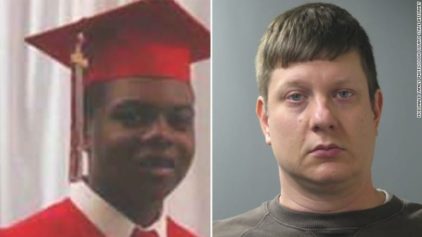
CHICAGO (AP) — The Illinois attorney general’s office has signaled it may be considering a rare sentencing-related appeal if it concludes that the less than seven years in prison a white Chicago police officer received in the killing of black teenager Laquan McDonald was wrongly calculated.
The office said in a brief statement emailed Thursday it is reviewing Jason Van Dyke’s sentence. With credit for good behavior, Van Dyke will likely serve only around three years for firing 16 bullets into McDonald in 2014. Dashcam video of the shooting released by the city in 2015 showed Van Dyke continued to fire as the 17-year-old crumpled to the street and lie on the ground.
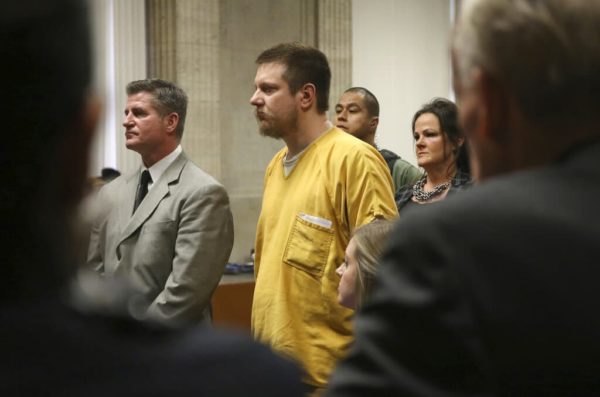
Former Chicago police Officer Jason Van Dyke and his attorney Daniel Herbert listen during Van Dyke’s sentencing hearing at the Leighton Criminal Court Building, Friday, Jan. 18, 2019, in Chicago, for the 2014 shooting of Laquan McDonald. (Antonio Perez/Chicago Tribune via AP, Pool)
The graphic video images stirred expectations that Van Dyke would receive a lengthy sentence. But activist William Calloway, who helped force the city to release the video, echoed the sentiment of many Chicago residents last week when he said the punishment imposed by Cook County Judge Vincent Gaughan amounted to “a slap on the wrist.”
Van Dyke’s attorney, Dan Herbert, criticized Illinois Attorney General Kwame Raoul for appearing to contemplate an appeal, saying his office could have weighed in prior to last Friday’s sentencing and presented its views to the judge.
“Now he suddenly has concerns after the sentencing in the wake of some public outcry,” Herbert said in a written statement. “This is about politics not the law.”
Attorneys acknowledged before sentencing that the judge was heading into unchartered waters, having to calculate the proper sentence for what is thought to be the first case in which a Chicago officer was convicted of killing an African-American. How he was charged and his lack of any previous criminal record further complicated calculations.
Prosecutors had asked Gaughan to hand the 40-year-old Van Dyke a sentence of between 18 and 20 years, saying in an earlier written filing that one could also make an argument for a sentence of up to 96 years. The defense said giving Van Dyke no prison time and putting him on probation would have been appropriate.
One Chicago-based attorney Steve Greenberg, who has defended clients at more than 100 murder trials, said such appeals rarely succeed unless the sentencing judge’s error is egregious.
“From a logical standpoint, I think the sentence is correct,” he said. “From a legal standpoint, it might not be.” He added: “I think there is a fair chance the higher court would say the sentence was wrong.”
An attorney general’s office spokeswoman, Maura Possley, offered no details in her brief statement, including about potential lines of arguments in an appeal, saying only that “we are going to do a careful review of the record and the law and make a determination based on our review.”
Greenberg said there may also be legal questions about the authority of the attorney general’s office to take the lead on any such appeal since it wasn’t a party in the criminal case, or whether the prosecutors must take the initiative.
In a statement, the special prosecutor, Joseph McMahon, said prosecutors can’t directly appeal a sentence but can seek what is called a writ of mandamus, which can result in an order from the Illinois Supreme Court telling a judge to adhere to the correct law. He said his office is reviewing the judge’s ruling on sentencing.
“The unique facts of this case require consideration of the complex principles of Illinois law,” McMahon said.
Jurors convicted Van Dyke in October of one count of second-degree murder, which carries a prison term of between four and 20 years, and of 16 counts aggravated battery. A single count of aggravated carries a prison term of between six and 30 years, and judges can order that the sentence for each count be served one after the other.
Under Illinois law, Gaughan could only sentence Van Dyke for one crime — the one he deemed the more serious. His decision to accept defense arguments that second-degree murder was the more serious crime likely spared him a longer sentence because aggravated battery carries higher mandatory minimums and can be served consecutively.
Illinois courts have previously suggested that judges deem crimes with the stiffer available sentences the more serious, said Greenberg. That raises the possibility that a higher court could order a do-over, instructing Gaughan to sentence Van Dyke on the 16 counts of aggravated battery instead.
Van Dyke’s lawyer disagrees, saying “the judge in this case carefully considered the arguments made and issued the correct ruling under the law.”
Van Dyke also was fortunate that jurors chose to replace the original first-degree murder charge with second-degree murder. First-degree murder carries a mandatory minimum prison sentence of 45 years.