A local activist is looking to address the violence plaguing a Durham, N.C., community in a new and unique way.
The McDougald Terrace public housing complex is home to majority-Black residents who have seen their fair share of shootings and murders. Activist Paul Scott said it’s time that changed and has offered a solution: a new crosswalk.
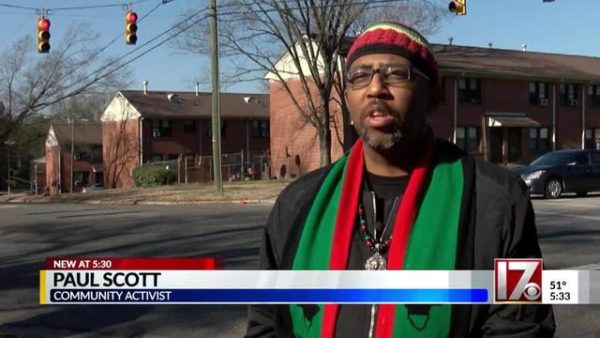
Activist Paul Scott believes instilling pride in one’s community can help combat crime and violence. (Image courtesy of WNCN)
“A lot of times you see on the news about shootings and things of that nature,” Scott told Durham station WNCN. “So we hope that a crosswalk will help give a positive sense of self-worth to the residence.”
This won’t be your ordinary crosswalk, however. Scott said he imagines the crosswalk at Ridgeway Avenue and E. Lawson Street to be repainted red, black and green — the colors of African pride. The symbols also represent Kwanzaa, the week-long celebration honoring African and African-American heritage and culture.
For Scott, having pride in one’s community and reducing gun violence go hand in hand. In 2018 alone, Durham saw 500 violent crime,s including homicide, rape and robbery, city crime statistics show.
“To stop the violence, black-on-black crime, the only thing that has ever worked historically is giving our people a sense of pride,” he explained. “Maybe if they see that, it’ll be a pathway to a better tomorrow.”
Scott has launched a petition for his effort and plans to take it to Durham’s City Council in hopes it will be the next step in reducing violence in the area.
Watch more in the video below.