ADDIS ABABA, Ethiopia (AP) — Eritrea has partially closed two border crossings with Ethiopia that opened this year after the former East African rivals made peace and restored relations, an Ethiopian official said Friday.
Thousands of people have crossed the border that had been closed for two decades, with traders pursuing brisk business and families reuniting after years apart. The crossings opened with fanfare in September as both countries said they would remove their troops.
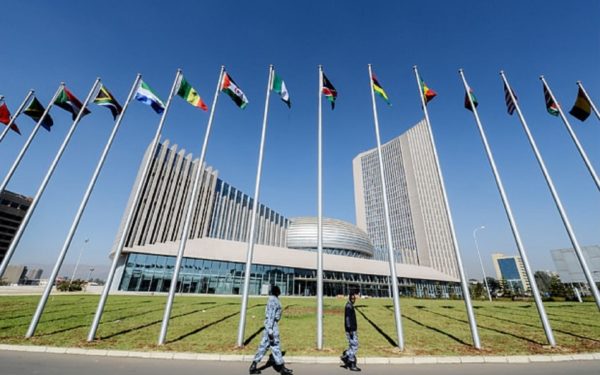
The AU headquarters in Addis Ababa, Ethiopia
It was not clear why Eritrea closed the crossings to Ethiopians, spokeswoman Liya Kassa with Ethiopia’s northern Tigray region told The Associated Press. She said Eritreans were still crossing freely.
The Zalambessa and Rama crossings were closed as of Wednesday morning and preliminary information “indicates it was closed from the Eritrean side,” she said.
Eritrean border officials are now asking Ethiopian travelers to provide a travel document issued by federal authorities, she said. “We have communicated the issue with the federal government and we were told they don’t have any information about it,” she added. “Only Ethiopians are facing the restrictions.”
Eritrean officials were not immediately available for comment.
Ethiopia’s foreign ministry spokesman on Thursday told reporters he had no information about the new border restrictions. Photos posted on social media show stranded buses and trucks at the two crossings.
Abraham Gedamu, an Ethiopian traveler who went to Zalambessa to cross into Eritrea for a religious event, said he was denied entry on Thursday morning.
“They said I have to wait because they are drawing up a new travel directive. Several hundred others are facing the same issue,” he told the AP by phone.
Ethiopia and Eritrea restored relations in June after Ethiopia’s new prime minister, Abiy Ahmed, assumed power in April and fully accepted a peace deal ending a bloody border war from 1998 to 2000. Dramatic changes followed, with Abiy and longtime Eritrea President Isaias Afwerki visiting each other’s capitals and embracing while phone lines opened and air links resumed.
The international community welcomed the new peace that has led to further diplomatic breakthroughs in the often turbulent Horn of Africa region. In November, the U.N. Security Council voted unanimously to lift sanctions against Eritrea after nearly a decade.
“Eritrea recognizes that a more difficult and complex task is waiting ahead,” Eritrea’s Charge d’Affaires Amanuel Giorgio said after the council’s vote. “It is determined to redouble its own efforts and work closely with its neighbors to build a region at peace with itself.”