ADDIS ABABA, Ethiopia (AP) — Ethiopian military officials on Friday announced they are moving troops away from the border with Eritrea, months after the former rivals made a surprising peace.
Relations have “improved tremendously” and the “threat level from the Eritrean side has declined sharply. So we have decided that there is no use in keeping that massive force in the border areas,” said Gen. Asrat Denero, head of the army’s Western Command. “It will be deployed to other locations.”
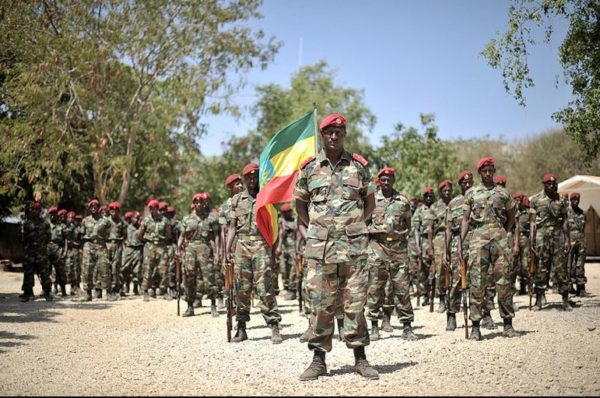
Ethiopian Army
He did not say how many troops will be moved. Lt. Gen. Molla Hailemariam, special operations chief with the Ethiopian Defense Forces, said the majority of armed forces had been deployed along the border. But the situation “has changed dramatically,” Molla said. Both officials spoke during a press conference aired by the state-affiliated Fana Broadcasting Corporate.
Amid the country’s sweeping reforms since Prime Minister Abiy Ahmed took office in April, officials also say army commands are being cut from six to four, while landlocked Ethiopia seeks to re-establish a naval force.
Ethiopia and Eritrea ended two decades of border tensions related to a bloody 1998-2000 conflict and re-established diplomatic ties this year, opening border points and communications links. Aid groups and others have said several thousand people have crossed into Ethiopia from Eritrea since then, some of them settling in northern villages.
Some Ethiopians have seen the army reforms as a way of reducing the power of some top military commanders from the Tigray region bordering Eritrea. Many from the Tigrayan ethnic group had assumed top ranks in the decades since the ruling coalition assumed power in 1991.
Some former Tigrayan officials who until recently dominated top posts in the government had resisted making peace with Eritrea under previous administrations.
Ethiopian military officials maintain that the country, Africa’s second most populous, has one of the largest armies on the continent. Ethiopia is a key security ally of the United States in the Horn of Africa region and is the largest contributor to United Nations peacekeeping missions.