During his royal visit to Ghana, Prince Charles called Great Britain’s involvement in the trans-Atlantic slave trade an appalling “atrocity” that has left an “an indelible stain on the history of our world.”
The heir to the U.K.’s throne made the comments during a speech from the West African nation as he and his wife, Camilla, wrapped up the second leg of their three-country tour across Africa, The Guardian reported. On Monday, Charles visited the Christiansborg Castle in Osu, where an estimated more than 1.5 million Africans were shipped away to a life of slavery across the Atlantic.
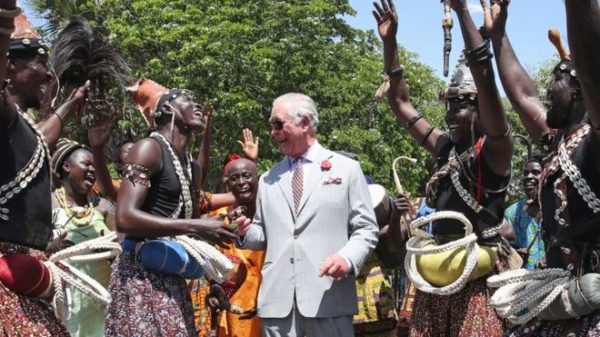
Prince Charles said the “profound injustice” of the trans-Atlantic slave trade must never be forgotten. (Photo by Getty Images)
“At Osu Castle on Saturday, it was especially important to me, as indeed it was on my first visit there 41 years ago, that I should acknowledge the most painful chapter of Ghana’s relations with the nations of Europe, including the United Kingdom,” Charles said, calling the trade a “profound injustice.”
The castle, which originally operated as a Danish slave trade fort, later became the seat of the Ghanaian government after the nation won its independence from Britain in 1957.
Charles added: “While Britain can be proud that it later led the way in the abolition of this shameful trade, we have a shared responsibility to ensure that the abject horror of slavery is never forgotten.”
By the time Britain abolished the trade in 1807, the country had been involved in the buying, selling and transport of enslaved Africans for over 200 years. Full abolition of slavery throughout the British colonies did not come until 1833.
Charles’ latest remarks signaled a significant step in the U.K. again recognizing its role in the “horrid” slave trade, something critics have long called on the royal family to do, along with an apology for all the damage it has caused.
Not everyone was impressed with the acknowledgment, however, and slammed Ghanaians for fawning over the prince’s royal visit. Ghanaian-English rapper Fuse ODG noted how the royalty in Ghana didn’t get nearly as much fanfare as Charles and Camilla.
“I see that Prince Charles and Camilla are in Ghana right now, and I see Ghana pulling their best resources, their highest security and their best hospitality ever,” the hip-hopper, whose real name is Nana Richard Abiona, said in a video posted to Twitter. “We’re even taking our children out of school.”
Abiona warned Ghana about what it’s teaching its future leaders by “going out of our way to serve and praise these people who look nothing like them.”
“These kids have never seen Ghana on lockdown for any African leader or royalties in Africa,” he said, adding, “For the people traveling all the way to Ghana just to shake [the royals’] hands, I hope you’re there … to ask the right questions considering the history between the British monarch and Africa and the trauma … of millions of Africans dying in the slave trade.”
Prince Charles and his wife have already visited Gambia and stopped in Nigeria on Tuesday.
Watch more in the clip below.
I'm genuinely confused about the fuss that's being made about Prince Charles visit to Ghana.. maybe someone can explain to me ??!🤷🏿♂️ #BraFie #NewAfricaNation #RoyalVisitGhana pic.twitter.com/dlgARa0EKA
— Fuse ODG (@FuseODG) November 3, 2018