Viral video of a Chinese worker calling Kenyan citizens “monkeys” in a racially-tinged tirade last month is just one of many incidents that have Kenyans worried about the nation’s plans to expand its relationship with China, according to The New York Times.
Kenya has welcomed China’s growing presence in the region with open arms, but many like Richard Ochieng’, 26, fear the country may have inadvertently admitted a group of powerful foreigners intent on forcing their racist attitudes upon natives.
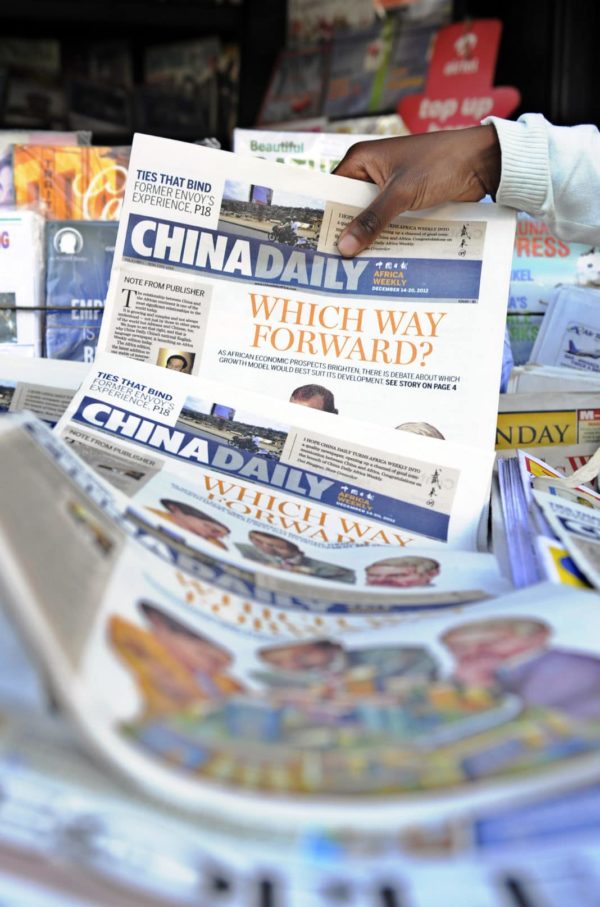
Younger Kenyans fear increased investment by China will bring more racism and discrimination to the country. (Photo by TONY KARUMBA/AFP/Getty Images)
It was Ochieng who shared footage of his boss, Liu Jiaq, making offensive remarks about the East African nation, saying he hated Kenya because it, “smells bad and (its people are) poor, foolish and broke.” Jiaq, who expanded his motorcycle company to Africa, went on to declare that Kenyans were “like a monkey people” and even likened President Uhuru Kenyatta to a primate.
The racist rant ultimately led to Jaiq’s deportation and discipline from his superiors. That wasn’t the first time Jiaq made racist remarks, however, and locals say the issue still hasn’t been squared away. These countless racial incidents and growing Chinese work force have left many Kenyans feeling troubled, to say the least.
“They are the ones with the capital, but as much as we want their money, we don’t want them to treat us like we are not human in our own country,” David Kinyua, who manages an industrial park in Ruiru that is now home to several Chinese companies, including the motorcycle company where Ochieng’ works, told The New York Times.
Concerns of racism and discrimination have also sprouted in the nation’s capital of Nairobi, where workers in their 20’s and 30’s shared stories of bigotry they’ve witnessed first-hand. One woman recalled the time her Chinese manager slapped her Kenyan colleague, who is also a woman, for a minor mistake. Another Kenyan worker said there were separate office bathrooms: one for Chinese employees and one for Kenyan employees.
Ochieng recalled the first time his boss called him a “monkey.” He said they were on a business trip when they spotted a group of baboons along the roadside, after which his boss exclaimed, “your brothers!” and encouraged Ocheing to feed the animals bananas.
Before that day, Ocheing said he’d never experienced racism directly.
It’s unclear how many Chinese are living in Kenya today, but a research group cited by the Times put the figure at somewhere around 40,000. Many reside in the country for only a few years, for work purposes, according to the newspaper. Most Chinese workers live together in large residence developments and are bussed to and from work, engaging in little social interaction with Kenyan locals.
“Because of the isolation and lack of integration, usually they are not very aware of the local situation,” said Hongxiang Huang, a Chinese conservationist who used to live in Nairobi. “They do not know very well how to interact with the outside world.”
Still, the country is looking to strengthen its ties with Africa. Last July, China increased its investment efforts in the Motherland by working to train the continent’s next generation of transportation and aviation professionals with five new transportation universities. Quartz Africa also reported that there are more than 20 Chinese-run agricultural training centers and over 40 Chinese language schools across the continent.
Even with its growing investment, critics like author Howard French argue that China has a tendency to dismiss criticism of its conduct toward Africans. They are missing the point, he said.
“Their experience is that they are being treated in flagrantly disgusting, racialized ways” French told The New York Times.