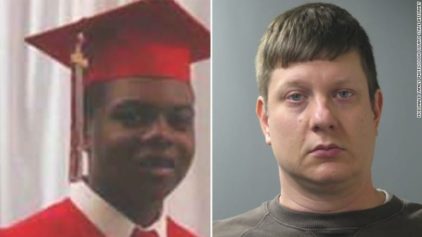
Chicago police Officer Jason Van Dyke is charged with first-degree murder in the shooting of black teenager Laquan McDonald in 2014. (Antonio Perez/Chicago Tribune via AP, Pool, File)
Attorneys Spar over Race Issue in Jury Selection at White Officer’s Trial for Killing Chicago Black Teen
CHICAGO (AP) — Attorneys sparred over race on Wednesday during jury selection in the trial of a white Chicago police officer charged in the 2014 shooting death of a black teenager.
An African-American woman who works as a FedEx driver was selected in the first hour of the second day of jury selection, but only after prosecutors in a motion accused Officer Jason Van Dyke’s attorneys of illegally trying to keep minorities from sitting on the jury.
The issue came up when defense attorneys asked to keep her off the jury, pointing to the woman’s reply to a questionnaire in which she said the shooting of Laquan McDonald 16 times was “horrific” and her hesitation when asked during jury selection if she’d be comfortable acquitting Van Dyke.
But prosecutor Marilyn Hite-Ross argued that Van Dyke’s attorneys had illegally used one of their challenges to remove the woman from the jury for no other reason than her race. Judge Vincent Gaughan denied the motion, saying that Van Dyke’s attorneys, who removed two African-Americans from the jury pool during jury selection on Monday, had given “race-neutral explanations.” Gaughan refused to remove the woman for cause and the woman was subsequently selected for the jury.
The woman was one of five people who was selected for the jury on Wednesday, bringing the number of jurors who have been selected for the jury in less than two days of questioning by attorneys to 10. Twelve jurors and four alternate jurors will be selected.
The woman told the judge that she could put aside what she knows about the shooting and be fair. But she also made a point that is certainly going to figure prominently in the trial: The 16 shots that Van Dyke fired. “I can’t lie about that. … That’s a lot of shots,” she said.
Wednesday’s questioning also resulted in two Hispanic women being selected for the jury, a mother of a 6-year-old girl who is also a grandmother. After she said that the protesters outside the courthouse had frightened her, Van Dyke’s attorneys requested that she not be selected for the jury, but Gaughan denied the request.
An aspiring Chicago police officer, a Hispanic woman in her 20s, was selected. She said she hasn’t seen a video of McDonald’s shooting nor formed an opinion on the case.
By mid-afternoon, the jury includes the African-American woman, three Hispanics, five whites and one Asian-American.
Whether the 10 people will actually sit in the jury box is unclear. Van Dyke’s attorneys have yet to announce if they want a jury trial or allow the judge to decide in what is called a bench trial. Also, defense attorneys have filed a motion asking that the trial be moved outside of Chicago because, they say, the extensive local news coverage has made it impossible for Van Dyke to receive a fair trial in the city. Gaughan said he wanted jury selection to proceed before making a decision on that motion.