The Detroit school district announced Wednesday that drinking water would be shut off for all 106 of its schools after testing revealed higher-than-normal levels of lead and copper.
The decision comes just a week before students head back to class, but officials say the water should be shut off by the end of the week. Sixteen out of 24 schools that were recently tested had elevated metals levels.
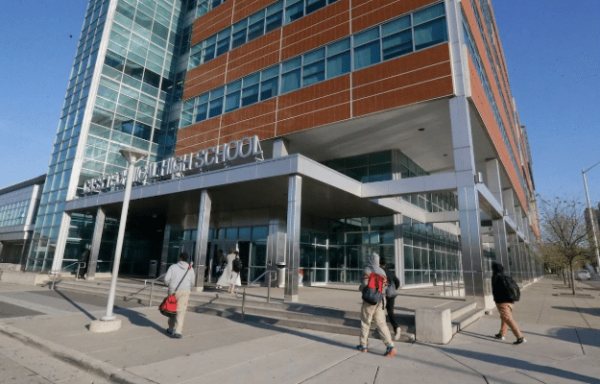
Testing at 16 of 24 Detroit city schools showed elevated levels of lead and copper, prompting the water shutoff. (Photo by Carlos Osorio/AP)
“Although we have no evidence that there are elevated levels of copper or lead in our other schools where we are awaiting test results, out of an abundance of caution and concern for the safety of our students and employees, I am turning off all drinking water in our schools until a deeper and broader analysis can be conducted to determine the long-term solutions for all schools,” said Nikolai Vitti, superintendent for the Detroit Public Schools Community District.
According to the Detroit Free Press, Vitti called for water testing at all 106 of the district’s school buildings earlier this year to ensure the safety of students and staff. Now 16 more schools have had their water shut off, bringing the total number of schools where water has been turned off to 34.
“This wasn’t required by federal, state or city law or mandate,” Vitti said on Wednesday. “This testing, unlike previous testing, evaluated all water sources from sinks to drinking fountains.”
The district said it has no plans to test students, however, saying it has no reason to believe students’ health was impacted. Officials said they took immediate action after learning of the elevated lead/copper levels by shutting off all drinking water at the 16 schools and providing staff with bottled water.
Moving forward, Vitti said he hopes to create a task force formed by water quality experts aimed at pinpointing the cause of the elevated levels and helping the district come up with solutions.
The city’s water and sewage department, along with the Great Lakes Water Authority, have tried to assure residents the agency’s regional system was unaffected by the elevated lead levels and instead pointed to the district’s aging infrastructure/plumbing as the issue.
“The water at GLWA’s treatment plants is tested hourly and DWSD has no lead service lines connected to any DPSCD building,” the agency said in a statement.