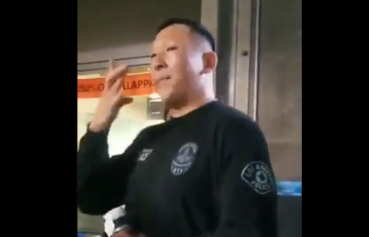
Two women found themselves in handcuffs Tuesday after they allegedly hurled a powdery substance in the direction of LAPD Chief Charlie Beck during a raucous Los Angeles Police Commission meeting.
The women, identified as Melina Abdullah of Black Lives Matter-Los Angeles and Sheila Hines-Brim, the aunt of Wakeisha Wilson, who died in LAPD custody, were detained by police shortly after the incident, local station NBC4 reported. Witnesses say Hines-Brim threw a handful Wilson’s ashes at Beck, some of which landed on the police chief.
The meeting was recessed and the room immediately cleared after the substance was thrown. Hazmat officials were called in to make sure the powder wasn’t hazardous.
“That’s Wakiesha! She’s going to stay with you,” Hines-Brim reportedly shouted as she walked away.
Wilson died in police custody in March 2016. Authorities said she was found hanging in her cell at the Metropolitan Detention Center and a coroner ruled her death suicide. Her family and local activists disputed the ruling, however, arguing the young woman wasn’t suicidal and had instead died as a result of a scuffle with corrections officers, according to the Los Angeles Times. The family also accused the LAPD of failing to notify them of her death.
Last year, the city agreed to settle a wrongful death lawsuit brought by Wilson’s family for nearly $300,000, NBC4 reported.
After her release from jail on Tuesday, Hines-Brim, who was booked for battery on a police officer, said it was her niece who told her to throw the ashes.
“I heard her clearly tell me,” she told CBS Los Angeles. “I used her ashes so they can be with him so he can feel her, because he murdered her. They covered it up.”
Hines-Brim and Abdullah are both expected to be charged with misdemeanors.
Beck issued a statement following the incident, saying it was “not only disrespectful to the office of the chief of police, but more importantly to a process of community engagement that has been recognized across the nation.”
“This only created chaos and fear for any Angelenos who wanted to voice their opinion about policing in our city,” he said.