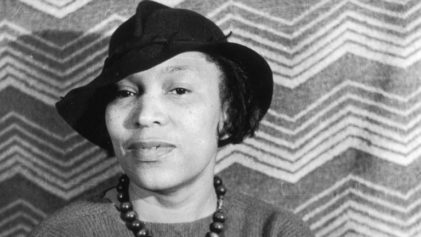
Zora Neale Hurston’s manuscript remained hidden in the archives at Howard University for decades. (Image courtesy of Biography.com)
A book penned by acclaimed African-American author Zora Neale Hurston in 1931 is finally hitting store shelves, nearly 87 years after it was first written.
On May 8, HarperCollins will publish Hurston’s lost work titled, “Barracoon: The Story of the ‘Last Black Cargo,” according to The Washington Post. The book, which remained hidden in the archives of Howard University for decades, chronicles the life of an elderly man named Cudjo Lewis who was believed to be the last man kidnapped from Africa and brought to the U.S. to work as a slave.
The book was never published, however, and some publishing houses complained that Lewis’ heavily accented dialect was too hard to read. About fifty years would pass after Hurston’s death before the Zora Neale Hurston Trust would find a buyer to publish her work, The Washington Post reported.
“We don’t know how much Barracoon was a verbatim account of The Last ‘Black Cargo.’ But Zora’s enthusiastic rejection of respectability politics” — her rejection of publishers’ demands to tidy up Lewis’ accent — “makes her ahead of her time,” Natalie Hopkinson, a board member with the Hurston/Wright Foundation, wrote in an op-ed for Huffington Post last month.
“Barracoon and its long path to print is a testament to Zora’s singular vision amid so many competing pressures that continue to put us at war with ourselves,” Hopkinson added.
The book’s title “Barracoon” is a nod to the crowded enclosures enslaved Black folks were confined to during the arduous Middle Passage of the Trans-Atlantic slave trade. The new book also features an introduction by Deborah G. Plant, and a foreword by Pulitzer Prize-winning author Alice Walker, who’s credited with rekindling interest in Hurston’s works in the ’70s.
Speaking to Hurston, Lewis said he was kidnapped from his home village, Takkoi, during a raid by one King of Dahomey who got filthy rich “ketchin slaves,” and selling them to white slave holders. After a three-day trek to the coast, Lewis and more than 100 fellow villagers were stripped naked and forced into a barracoon aboard the notorious “Clotilda,” which was believed to be the last American slave ship. Remnants of the wrecked ship were believed to have been found in the Mobile-Tensaw Delta of Alabama earlier this year.
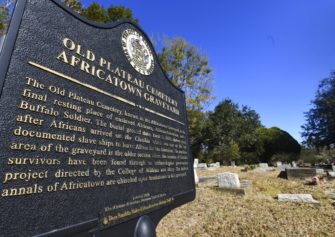
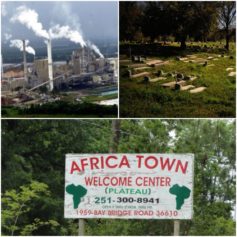
Lewis said he was sold to the owner of a shipping business upon his arrival in Mobile and worked as a slave until the Emancipation Proclamation freed him in 1865. After that, he and about two dozen others who were forced onto the Clotilda got together and founded Africatown, a community in Plateau, Ala. There, they were able to practice their traditional African customs and speak their native language.
Hurston would find Lewis in Africatown almost 60 years later. By that time, he was in his 80s.
” … Tears welled in his eyes as he described the trip across the ocean in the Clotilde. But what moved Hurston most about the old man, who she always called by his African name, Kossola, was how much he continued to miss his people back in Nigeria,” biographer Valerie Boyd wrote, citing a letter Hurston once penned to her friend, poet Langston Hughes.
“‘I lonely for my folks,’ Lewis told her.”