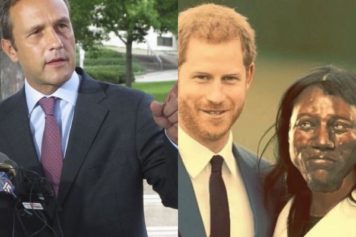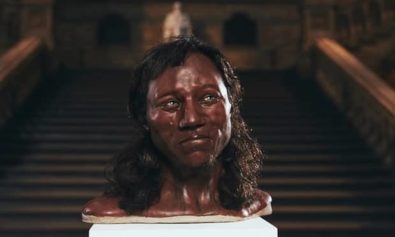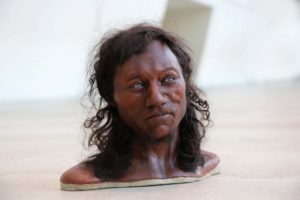
The most recent construction of the Cheddar Man skeleton depicted him with dark skin, curly hair and blue eyes. (Photo by Mark Richards/Daily Mail)
There’s a possibility the U.K.’s “Cheddar Man” may have been white after all, according to one main scientist who helped reconstruct the face of Briton’s oldest near-complete skeleton.
The declaration comes just a month after scientists performed a DNA analysis on the 10,000-year-old skeleton and sensationally revealed he had “dark to black skin,” curly hair and blue eyes. However, Geneticist Susan Walsh of Indiana University–Purdue University Indianapolis now says there’s simply no way of knowing Cheddar Man’s actual skin color.
While her computer model showed his “probable profile” as being Black, Walsh said DNA testing isn’t enough to say for certain, as the DNA may have degraded over all these years.
“It’s not a simple statement of ‘this person was dark-skinned,’ “ she told New Scientist. “It is his most probable profile, based on current research.”
Utilizing genetic sequencing and facial reconstruction techniques, researchers cross-reference genomes extracted from the ancient skeleton to construct a modern image of his outward appearance. The 10mm of bone powder drilled from his skull was enough to reveal anticipated clues into Cheddar Man’s phenotype and hunter-gatherer lifestyle — or so we thought.
A previous reconstruction of the first Briton, made by the University of Manchester before DNA tests were available, depicted him with fair, white skin, Daily Mail reported. That model had brown eyes, instead of blue, and lighter hair.
The most recent DNA analyzed from the skeleton showed a 76 percent chance he had dark skin, but scientists still say it’s impossible to know for sure.