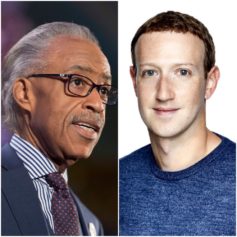
Facebook Chief Operating Officer Sheryl Sandberg told Congressional Black Caucus members that the company will add an African-American to its corporate board. (Photo by Vincent Isore/Getty Images)
Social media giant Facebook told lawmakers with the Congressional Black Caucus this week that the company plans to add an African-American member to its board of directors.
Chief Operating Officer Cheryl Sandberg made the announcement during a closed-door meeting on Capitol Hill Thursday, Oct. 12, as part of her tour of Washington.
Sandberg was meeting with lawmakers over Russian government-linked ads on Facebook intended to sow political chaos and influence the 2016 election. She told Congressional Black Caucus members the company already had a person in mind for the job, but stopped just short of disclosing a name. She also declined to say when Facebook would make a formal announcement on the matter.
The company’s board currently has eight members, all of whom are white. Just two of them, including Sandberg, are women.
During Sandberg’s visit, caucus members not only took Facebook to task over its lily-white board of directors, prompting Sanberg’s vow to help diversify the company, but also the Russian-bought ad referencing Black Lives Matter meant to fuel race-based tensions.
“Facebook is proudly an American company,” Rep. Andre Carson (D-Ind.) said. “And whenever you have [an] entity like the Russians who are purchasing ads in rubles or dollars through fake accounts, sowing seeds of racial tension and animosity and anti-immigrant sentiment and Islamophobia, we should all be concerned.”
The CBC has long pressed the tech industry and those in Silicon Valley to address its diversity issue and accelerate efforts to hire more women and racial minorities. A USA TODAY analysis showed that top universities churn out African-American and Hispanic computer science/computer engineering graduates at nearly twice the rate that leading tech companies hire them.
Although it acknowledged it’s still not where it needs to be, Facebook said it has made some improvements in diversifying its workforce. The company’s 2017 diversity report showed that women now make up 35 percent of Facebook’s global workforce, up from 33 percent last year. The company also increased its number of Black workers in the United States from 2 percent to three percent, and its Hispanic workers from 4 percent to 5 percent.
However, the number of Black and Hispanic workers in technical roles has remained flat at 1 percent since 2014. The same is true for nonwhites in senior leadership positions at the $500 billion company.