Attorney General Jeff Sessions’ Justice Department has been criticized for trying to do away with affirmative action. (AP Andrew Harnik File)
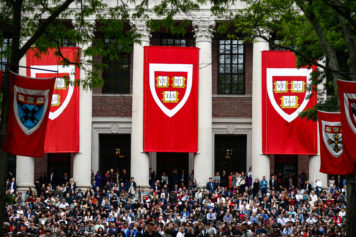
The Justice Department is investigating affirmative action policies at Harvard University after claims of racial discrimination during the admissions process.
News of the investigation comes after government watchdog group American Oversight submitted a Freedom of Information Act (FOIA) request to the DOJ asking it to hand over any documents related to affirmative action probes at two universities, including Harvard, The Hill reported.
The department responded with a letter confirming that the documents exist, but that they could not be released because they contain “records and/or information compiled for law enforcement purposes, and the release of which could reasonably be expected to interfere with enforcement proceedings.” This exception to the open-records law, known as (b7), is often used to protect active investigations, according to the news site.
American Oversight, along with the Lawyers’ Committee for Civil Rights Under Law, filed its request earlier this year after a New York Times report announcing the DOJ’s plans to investigate Harvard and the University of North Carolina-Chapel Hill for affirmative action policies deemed discriminatory to white applicants. The department denied the report, however, saying the documents obtained by the Times was actually a job posting related to a single complaint that accused Harvard and other Ivy League schools of discriminating against Asian-American applicants.
“The posting sought volunteers to investigate one administrative complaint filed by a coalition of 64 Asian-American associations in May 2015 that the prior administration left unresolved,” department spokeswoman Sarah Isgur Flores said in August.
At that time, Harvard had just welcomed its first freshmen class where the majority of students were minorities. The aforementioned complaint, filed by conservative activist Edward Blum, alleged that many Asian-American students who had nearly perfect SAT scores, impressive GPAs and were involved in extracurriculars were passed up by the school while similarly qualified students of other races were admitted.
While the response to American Oversight’s request didn’t explicitly mention that Harvard is in hot water, it did note that were no “responsive documents” related to any sort of “investigation of admissions policies, practices, procedures or criteria” at UNC, The Hill reported. This, by default, confirmed the investigation is focused at Harvard.
“When you think about what the top priorities for the Department of Justice should be at this time when it comes to civil rights, I can’t imagine that chiming in for the first time against affirmative action policies should be at the top of the list,” Austin Evers, executive director of American Oversight, told Newsweek.
Last year, the Supreme Court upheld the right for universities use race as a factor in determining whether to admit a student.