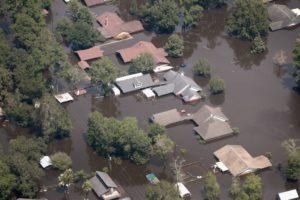
Homes surrounded by floodwater after torrential rains pounded Southeast Texas following Hurricane and Tropical Storm Harvey on August 31, 2017. (Photo by Scott Olson/Getty Images)
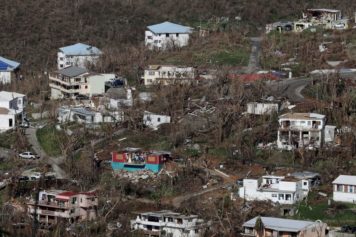
The U.S. economy suffered its first job decline since 2010, the Labor Department said Friday, losing 33,000 jobs in September after Hurricane Harvey and Irma wreaked havoc on parts of the southeastern U.S.
The loss comes as a major blow to an economy that has added an average of 172,000 new jobs every month for the past year. As predicted, the catastrophic storms caused extensive damage across coastal Texas and Florida, slowing hiring and bringing the longest period of interrupted job growth in U.S. history to an end.
Most economists had expected 80,000 new jobs to be created — but that didn’t happen.
As for the unemployment rate, it fell to 4.2 percent from 4.4 percent in August, marking a 16-year low. The unemployment rate for adult men (3.9 percent) and African-Americans (7 percent) also declined in September.
Employment in food services and drinking places was the hardest hit, losing 150,000 jobs last month after adding an average of 24,000 jobs per month so far this year. Employment in the healthcare and transportation and warehousing industries increased, adding 23,000 and 22,000 new jobs, respectively.
Despite the hurricanes’ devastating impact, economists said the job market and economy still appear to be in good shape, CBS News reported. They said they expect job growth to rebound in the coming months, as it did after Hurricane Katrina battered Louisiana in 2005, leaving millions of people jobless and without homes.
“If past storms, particularly Katrina, are any guide, employment will rebound markedly over the next few months,” Paul Ashworth, chief US economist at Capital Economics, told The Guardian. “The drop in the unemployment rate might persist, however, with consumer and small business surveys both pointing to a drop in the unemployment rate to nearer 4 percent for some time.”
Puerto Rico and the Virgin Islands, both U.S. territories affected by the hurricanes, are not included in U.S. jobs report.