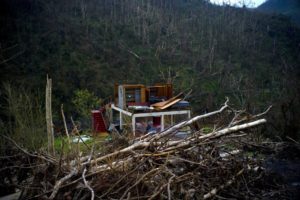
The foundation of a heavily damaged house stands in the mountains after the passing of Hurricane Maria in the San Lorenzo neighborhood of Morovis, Puerto Rico(AP Photo/Ramon Espinosa)
SAN JUAN, Puerto Rico (AP) — The official death toll from Hurricane Maria in Puerto Rico has increased to 34 from 16, the U.S. territory’s governor said Tuesday.
Gov. Ricardo Rossello also said he believes the hurricane that struck on Sept. 20 with winds over 150 mph caused $90 billion in damage across the Caribbean island.
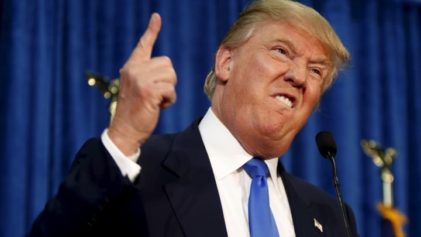
The governor made the announcement at a news conference following U.S. President Donald Trump’s short visit to the U.S. territory to assess the storm’s impact.
During his stop, Trump congratulated Puerto Ricans for avoiding a high death toll of “a real catastrophe like Katrina.” As many as 1,800 people died in 2005 when Hurricane Katrina breached levees protecting New Orleans.
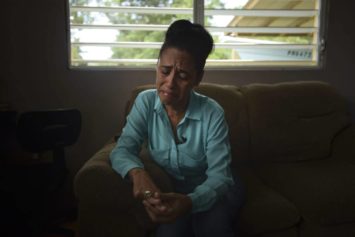
The governor said the death toll in Puerto Rico included 19 people who died as a direct result of the storm and 15 whose deaths were caused indirectly by the storm, local media reported.
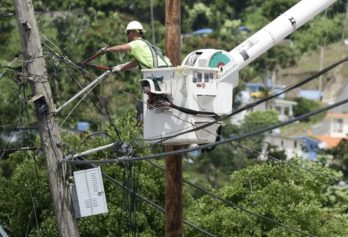
Nearly two weeks after the storm, 95 percent of electricity customers remain without power, including some hospitals. Some people have expressed concerns about the effect that extended outages will have on the ill and vulnerable in the tropical heat.
According to the Federal Emergency Management Agency, there are now more than 10,000 federal officials on the ground on the island, and 45 percent of customers now have access to drinking water. Rossello has said he hopes 25 percent of electricity customers will have power by the end of October.