
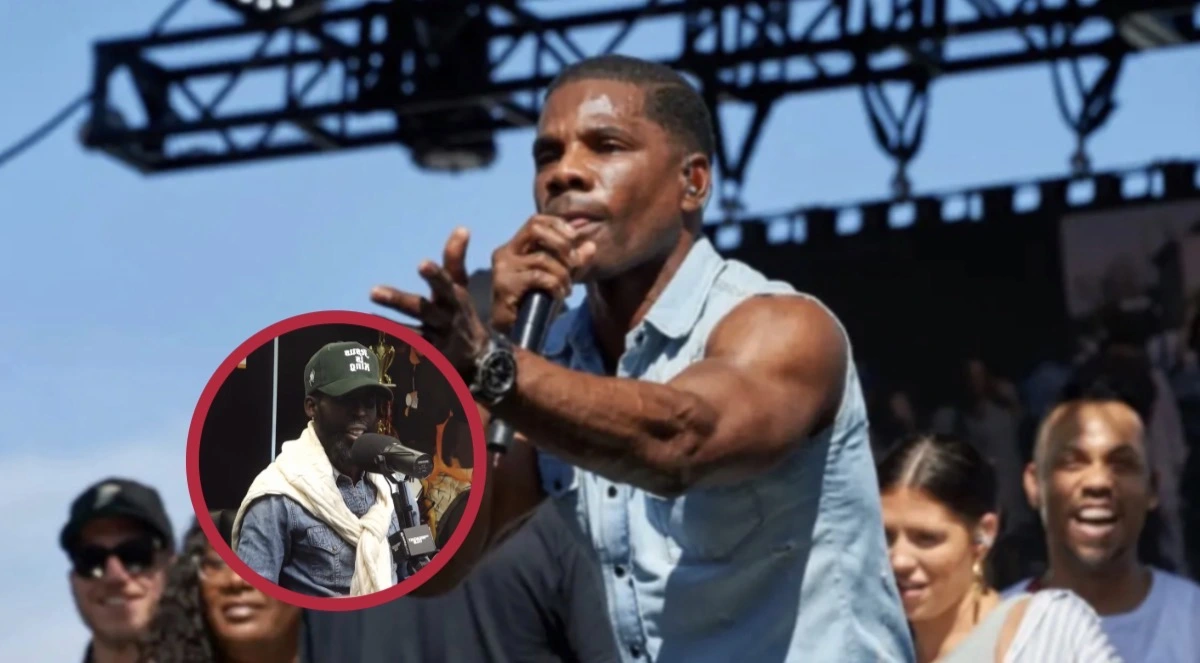
Kirk Franklin is no stranger to controversy in the gospel world.
And he seems to have no regrets about tapping the hottest artists climbing the charts for his latest album, “I Am What I AM.” His recent collaboration with Memphis rapper GloRilla has stirred up another debate about mixing sacred music with secular artists.
Now, fellow gospel artist Tye Tribbett has weighed in with an opinion that some fans believe deserves a closer look.
Tribbett recently explained why he would have made a different choice when it comes to his music. However, his comments have brought renewed attention to his own history of working with mainstream artists.
Some fans are wondering whether the rules change depending on who’s holding the microphone.
The Grammy-winning singer appeared on “The Breakfast Club” on Nov. 11 to promote “Victory B20,” marking the 20th anniversary of his breakthrough project, “Victory.”
During the interview, DJ Envy asked about the backlash Franklin received for featuring GloRilla on a remix.
“I think Kirk Franklin has been Kirk Franklin since he’s been Kirk Franklin,” Tribbett responded. “So I don’t know why people are surprised at Kirk Franklin.”
However, when Envy pressed him about secular artists entering gospel music, Tribbett acknowledged that he would have approached the collaboration differently.
“I love Glo,” he said, adding that Franklin could have given another artist the opportunity. “He did not have to go the GloRilla route.”
Tribbett argued that gospel artists should be mindful of maintaining boundaries between sacred and secular music.
“Christ was in the world. Christ walked the streets. He wasn’t in church all the time, but he never did the things the world did to try to win the world,” he explained.
His comments, however, divided Threads users.
“I think the most profound part of what he said is that Christ didn’t do the things of the world by trying to win the world and he is correct,” one wrote.
Another questioned the effectiveness of such collaborations: “I agree with Ty. Because also what did having Nicki on a gospel song really do as well. Does this really lead people to Christ or to the church?”
Others saw a double standard, pointing to Tribbett’s past collaborations.
“Tye has been jealous with everyone and he came behind him, so with that being said he wouldn’t be in this genre for younger generations but he did try his wasn’t received like Kirk Franklin Tye there was J Moss Fred Hammond stop lying Tye!!!” said one person.
Another asked, “Wasn’t Tye on Snoops album though…?”
The fan was referring to Tribbett’s appearance on Snoop Dogg’s 2018 gospel album, “Bible of Love.”
Tribbett performed on the song “You” and later joined Snoop and Jamie Foxx to perform it at the BET Awards that year.
There is, however, a key difference Tribbet was trying to point out, between that collaboration and Franklin’s decision to feature GloRilla.
Tribbett was invited onto a rapper’s gospel project, while Franklin invited a rapper onto his own gospel recording.
Snoop’s “Bible of Love” represented a departure from the rapper’s mainstream catalog, which frequently references marijuana, sex and street life.
Tribbett was participating in a project specifically devoted to gospel music. In essence, he was bringing the gospel message to Snoop’s audience, not introducing Snoop and his mainstream musical identity to Tribbett’s Christian fan base.
Tribbett’s musical history extends well beyond the gospel industry. Through his group, Greater Anointing (G.A.), he worked with Common, The Roots and Will Smith. He also earned vocal credits on Justin Timberlake’s hit “Cry Me a River.”
His early career also included performances with Jill Scott and tours with country stars Faith Hill and her husband, Tim McGraw.
Just a week before his Breakfast Club appearance, Tribbett told HipHopWired that he would consider recording with rapper Lil Baby.
“We have not, and I would be open to it,” he said. “It’s all about the message to me. As long as the message is legit, we could do it.”
Lil Baby and GloRilla are both mainstream rappers whose catalogs include explicit lyrics about relationships, sex and street life.
“It’s always the gospel artist that’s so critical. If you take the words GOD or Jesus out of his songs, they sound like an R&B song,” one Threads user argued.
Another added, “I understand it. However, if we’re going to be this critical then gospel artist should no longer be present at any other awards show outside of Gospel award shows.”
Franklin has weathered similar criticism for decades. His 1997 crossover hit “Stomp,” featuring Salt of Salt-N-Pepa, upset traditional gospel audiences. Salt recently recalled that some radio stations removed her verse.
The backlash resurfaced when Franklin collaborated with GloRilla on “Rain Down on Me” from her 2024 album “Glorious.” Their subsequent musical partnership revived questions about whether the rapper’s explicit catalog conflicts with gospel’s message.
However, Salt, John P. Kee and Da Brat have defended Franklin. They argue that his collaborations introduce gospel music to audiences who might never enter a church.
Franklin and Tribbett also share a lengthy professional relationship, sharing the same stages on tours and collaborating on “Could’ve Been” from Franklin’s 2005 album “Hero.”
Still, their differing approaches to incorporating mainstream artists and sounds into gospel music reflect an ongoing debate within the genre about tradition, artistic expression and the boundaries of contemporary gospel.
During Franklin’s “Den of Kings,” rapper T.I. questioned the church’s business practices, expressing skepticism about its motives and criticizing pastors who pressure congregants for money.
“I don’t think it’s real. I think it’s a business, just like anything else,” he said, criticizing pastors who pressure congregants for money.
Tribbett previously faced his own backlash after calling the church’s religious structure “wack” during a 2024 “Breakfast Club” interview, arguing that the church had lost sight of its responsibility to serve and love people.
Pastor Mike McClure Jr. publicly challenged him.
“How can you go on a national platform and totally throw under the bus the very institution that made you who you are?” McClure asked.
Meanwhile, the GloRilla debate continued on Threads.
“Her mama named her Glorious… SHE WAS SUPPOSED TO BE ON THAT SONG,” one person joked.
For Franklin and Tribbett, the disagreement highlights a familiar question within gospel music: How far should artists go to reach people outside the church?
View on Threads


