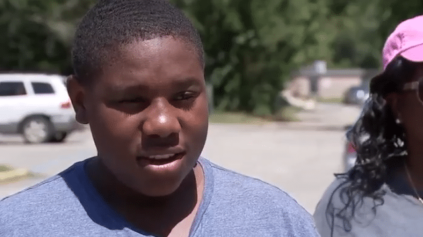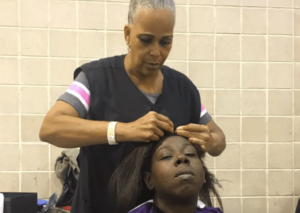
Braids are encouraged by hair stylists. (Amber Jamieson/ BuzzFeed News)
It will take years for victims of Hurricane Harvey to fully recover from the storm, but in the meantime, volunteer hairstylists are bringing a little sunshine to their plight.
Gallery of Salons is a volunteer network of Black stylists who closed their shops to style the tresses of thousands of victims taking shelter at NRG Center.
“You might have gone through the storm, but you don’t have to look like you went through the storm,” Christal Mercier, who organized the group, told BuzzFeed News Sunday, Sept. 3.
The team has been braiding and cutting hair for men and women alike, relying on dry shampoos and conditioning spray to cleanse the hair as much as possible since sinks are unavailable for washing.
Braids, which are encouraged due to their long-lasting nature — they can be installed for up to eight weeks at a time — are among the most popular hairstyles requested from evacuees.
“We’re trying to give styles that last,” Mercier said.
The Newest Stories on Hair Care:
This At-Home Hairstyling App Is Transforming the Salon Experience
Man Weaves Instill New Confidence In Men Who Are Losing Their Hair
Braiding Hair Without a License Is No Longer a Crime In Indiana, Thanks to New Law
While cornrows and Ghana braids (or feed-in braids) are encouraged, box braids and weaves are no longer being offered because of time constraints.
A barber had been on hand for a while to handle men’s hair needs, but with folks arriving at the shelter with their hair matted from the storm, women needed some pampering, too.
“I’ve been asking for five days, ‘Can we get somebody to do our hair?'” Shelia Mosley said. “Instead of the men getting their hair cut, can we look good, too?”
It’s no surprise that getting a fresh hairdo can lift spirits. Mercier knows that from her work with the not-for-profit Hair Dreams by Christal, which helps those who have lost hair from chemotherapy or other problems. Similarly, Atlanta salon owner Najah Aziz, who volunteered for cancer survivors, wrote in a 2012 op-ed that the results of styling can reinvigorate client and hairstylists alike.
“They were so appreciative of the effort and left feeling replenished in the soul,” she said. “And we, as a staff, were equally full, having witnessed so much strength in those women.
“We did something for ladies who needed uplifting. And it was a rewarding feeling.”