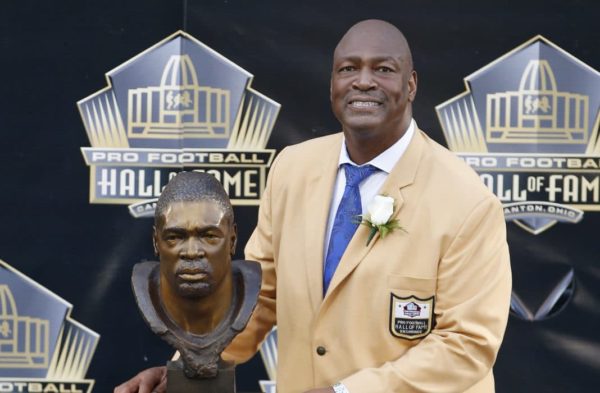
(Photo by Joe Robbins/Getty Images)
Charles Haley
It was during his football career that NFL Hall of Famer Charles Haley realized he had bipolar disorder. The former Dallas Cowboy and five-time Super Bowl champion was diagnosed with the disorder in 2003 but initially put off seeking help. After coming to terms with his mental condition, Haley said he began taking medication to get better.
“There are still ups and downs, and when I’m down, that can be pretty tough,” he wrote in his book “Fear No Evil: Tackling Quarterbacks and Demons on My Way to the Hall of Fame. “It seems like it’s mostly at night, when I’m alone and feeling worthless. I’ve been in those real, real dark places where I’ve thought about killing myself.” Haley now sees a psychiatrist and a counselor to help manage his disorder.

(Photo by Sarah L. Voisin/The Washington Post via Getty Images)
Jesse Jackson Jr.
In 2012, the Mayo Clinic in Rochester, Minn., revealed that congressman Jesse Jackson Jr. was undergoing treatment at their facility for bipolar depression. “Congressman Jackson is responding well to the treatment and regaining his strength,” the clinic said in a statement.
Jackson’s mental disorder forced him to take a leave of absence for several weeks, leaving fellow legislators to wonder about his condition. His office initially said he was being treated for “exhaustion,” but it was later revealed that Jackson had collapsed in his home before being admitted to the clinic. The 51-year-old, who served 30 months in prison for stealing money from his own campaign fund, now receives close to $100,000 a year in tax-free workers’ comp benefits due to his bipolar depression.