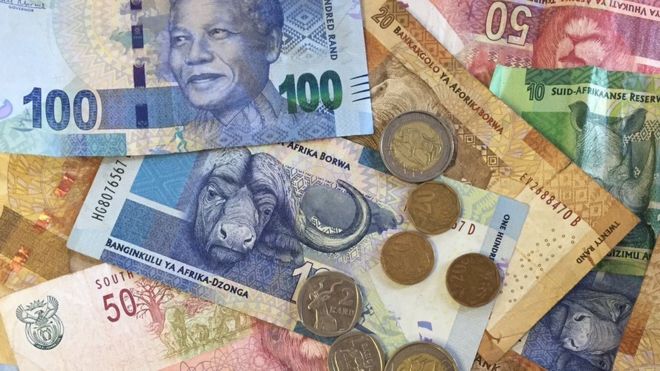
The rand has plunged in value over the past five years
Local and international banks have been accused by South Africa’s competition watchdog of rigging the price of South Africa’s currency, the rand.
Global giants Barclays, JP Morgan and HSBC are among 17 banks named as part of the two-year investigation. Banks colluded using online chat rooms to co-ordinate fictitious bids and offers in order to sway the market, the competition commission says.
It has called for the banks to be fined 10 percent of in-country annual turnover.
The banks are now likely to face prosecution at the country’s Competition Tribunal over the alleged currency manipulation, which investigators say goes back as far as 2007. Several banks have already said they will cooperate with the authorities.
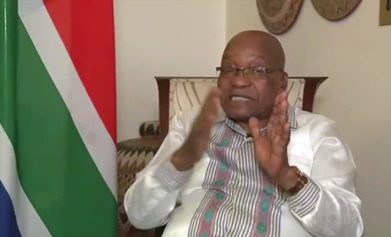
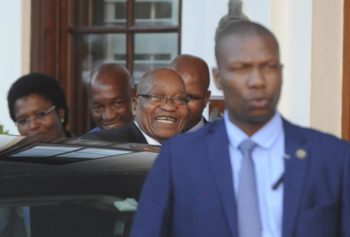
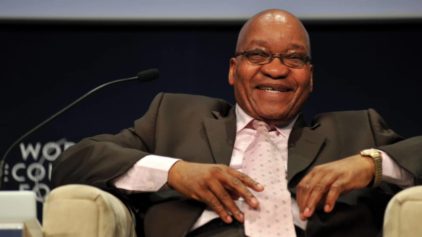
Speaking in parliament earlier, South African President Jacob Zuma welcomed the competition commission’s investigation, saying that the government was prepared to act against the distortion of the financial markets “to protect our country’s economy.” He also reiterated the government’s commitment to establishing a state bank, adding that new players must be allowed to enter to diversify the financial sector.
Foreign exchange scandals have rocked the international markets over the past 10 years and now it’s South Africa’s turn. The governing ANC party says the latest developments expose an “ethical crisis in the South African banking sector.” The opposition, Economic Freedom Fighters, is calling for the banks to have their operating licenses immediately revoked.
However, another opposition party, the Democratic Alliance, says the timing of the case is suspicious, given that in his State of the Nation address last week, Zuma referred to the competition authorities as one of the tools that would be used to drive radical economic transformation forward.
Even if, as expected, the 17 banks come to some sort of settlement with the South African authorities, the whole saga will still be another blow to the sector’s reputation. It also has given certain politicians more ammunition to bash the banks yet again. Zuma recently accused the country’s four largest banks of controlling the economy.
The South African rand has nearly halved in value against the U.S. dollar over the past five years, as the country goes through an economic crisis.
Major international banks have had to pay out billions of dollars in fines since a global scandal in 2013 over the rigging of foreign exchange markets.
Read more here