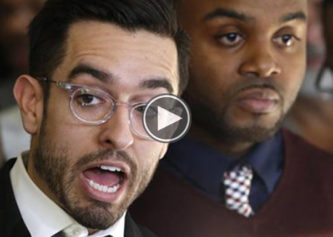
Chicagoan Ja’Mal Green courageously took Mayor Rahm Emanuel to task for allegedly redirecting financial resources to wealthy parts of the city and neglecting the poorer, Blacker areas that need resources the most.
Th outspoken audience member told MSNBC’s Chris Hayes during a Friday, Feb. 10, town hall titled “Chicago In the Crosshairs” that Emanuel “did not care about Black people.” Green criticized city officials for relying heavily on police to react to the situation of violence instead of investing resources that could prevent the current epidemic of violence and bloodshed.
Green said people are not discussing the root causes that create the conditions in Chicago. “When you talk about violence,” he explains, “you have to talk about the economics, not the police.”
In under a minute, Green broke down how the wealthiest Chicagoans continue to get richer as the poor continue to suffer because of the unequal distribution of funds that could be to blame for the Windy City’s issues. “When you can invest $100 million into DePaul basketball arena. When they can practice in the United Center for free and $16.4 million in uptown to build upscale apartments, when you can build these new bus stops downtown and walk in our neighborhoods and not a million is coming,” Green says.
“We’re walking past boarded-up schools, boarded-up houses they knocking down with red axes with no plan to redevelop … The unemployment rate in Chicago is the highest that it is around the country.”