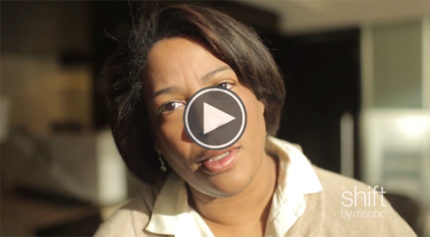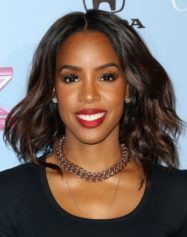
Jessica Williams and Salma Hayek (@msjwilly/@salmahayek Instagram)
Jessica Williams found herself shut down during a Sundance Film Festival luncheon when she brought up the issue of race and intersectional feminism to fellow actresses Salma Hayek and Shirley MacLaine.
The celebration of women in film took place Saturday, Jan. 28, and was meant for sponsors Glamour magazine and Girlgaze, which supports female photographers, to learn how to support women creators in their companies. The Los Angeles Times reported when the topic of President Donald Trump was brought up, the conversation veered in a political direction and Hayek cautioned the attendees not to “fall into victimization.”
“Don’t give me a job because I’m a girl,” she said. “It’s condescending.”
MacLaine added that all women present should examine their “core identity,” leading Williams to ask the 82-year-old the following: “What if you are a person of color, or a transgendered person who — just from how you look — you already are in a conflict?”
“Change your point of view of being victimized,” “The Apartment” star replied. “Find the democracy inside.”
Hayek posed a question to Williams, asking her to remove race and gender from the equation: “Who are you when you’re not Black and you’re not a woman? Who are you and what have you got to give?”
“A lot,” Williams said. “But some days, I’m just Black and I’m just a woman. Like, it’s not my choice. I know who I am. I know I’m Jessica, and I’m the hottest b—- on the planet. I know.”
MacLaine and Hayek suggested there was more to it than William’s race and gender, leading the former “Daily Show” correspondent to pause for a moment before responding.
“I think what you’re saying is valid,” Williams said, “but I also think that what you’re saying doesn’t apply to all women. I think that’s impossible.
“When I talk about feminism, sometimes, I feel like being a Black woman is cast aside,” she added. “I always feel like I’m warring with my womanhood and wanting the world to be better, and with my Blackness — which is the opposite of whiteness.”
Williams became noticeably uncomfortable as the conversation continued. “I think we need to not speak over Black women,” she said. “Not assign them labels.”
Hayek questioned what Williams meant by “speak over,” to which the 27-year-old said, “To project your ideas on me.
“I think there is a fear that if we present an idea that, ‘Hey, maybe [Black women] have it a little bit harder in this country’ — because we do; Black women and trans women do — if we’re having it a little bit harder, it doesn’t invalidate your experience. I really am begging you to not take it personally.”
Hayek later said she felt “misunderstood” and disagreed that she was shutting Williams down. After explaining that she was told as a Mexican and Arab woman that she wouldn’t make it in the business, the “Beatriz at Dinner” star said she understood.
“You don’t understand,” Williams said.
The discussion led to an outpouring of support for Williams as many expressed disappointment in Hayek.
https://twitter.com/rgay/status/825456347625951234
& another example of how WOC in other races use their success to discredit the concerns of BW as a personal problem not a systemic one
— B (@Breliloquy) January 31, 2017
https://twitter.com/coffeespoonie/status/825717803617497088
https://twitter.com/WickedBeaute/status/825589304101593089
https://twitter.com/Christiana1987/status/825570426256384000
@FeministGriote The thing that really irks was Salma trying to pin victimhood on Jessica bc that’s how SHE read her experience not Jessica
— Neveruary 32nd (@MomDeanie) January 29, 2017
Salma Hayak's terrible response to Jessica Williams very real and valid feelings is exactly what we mean when we say WOC ≠ Black Women
— Jasmyn (@JasmynBeKnowing) January 29, 2017