Expert: China’s New Ivory Ban Will Go a Long Way Toward Protecting Elephants in East Africa

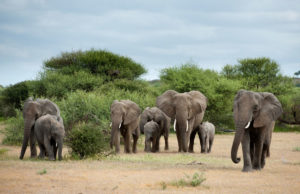
Elephants on an African Reserve (Photo via safaribookings.com)

Nakuru — Since the 1970s, poaching has been a major threat to the survival of elephants in Kenya, with some critics in recent years blaming the Chinese market for fueling the demand.

Now, a new era has begun as the Chinese government announced on Dec. 30 its plans to proscribe processing and sale of ivory by the end of 2017.

Jabes Okumu, a wildlife expert with the East African Wild Life Society, in an interview with Xinhua, hailed it as a strong move towards protection of elephants.

Okumu said the decision to shut down China’s domestic market will to a greater extent reduce pressure on the wildlife resources not only in Kenya but also in East Africa. The wildlife expert said the ban will lead to crippling prices as a result of limited buyers of raw ivory, as well as a decline in supply resulting from a lower number of distributors.

“This move is likely to attract support from other ivory-consuming countries and this will help build synergies towards pushing for full protection of elephants as indicated in schedule II to I of the CITES,” he said.

CITES, or Convention on International Trade in Endangered Species of Wild Fauna and Flora, is an international agreement between governments aiming to ensure that global trade in specimens of wild animals and plants do not threaten their survival.

Conservationists have identified a number of threats to African elephants, including poaching and habitat losses due to climate change, drought and human encroachment.

Read more here.

Democracy needs journalism it can trust.

This election season, the stakes are higher than usual — and so is the pressure on newsrooms to soften their coverage, stay quiet, or just disappear. Independent reporting, the kind that answers to readers instead of advertisers or political pressure, matters more in a moment like this, not less.

For over 14 years, Atlanta Black Star has stayed independent and reader-funded. We have no corporate owner and no shareholders telling us what to cover or how to cover it. That independence is also our biggest vulnerability: nothing protects it except readers choosing to fund it directly.

Newspaper ad revenue has fallen more than 80% since 2005, and local newsrooms are closing at a rate of roughly two a week nationwide. When outlets go under in a moment like this, it's rarely the independent, reader-funded ones that get to stick around.

We know a request for support isn't why you came here. But without readers choosing to fund this work directly, the depth of reporting we can do at home and abroad shrinks along with everyone else's. If you're not in a position to give, that doesn't change how much we value you as a reader.

If you are able to, a recurring contribution does more for us than a single one-time gift, because it lets us plan the next investigation instead of just the next invoice. It takes about 30 seconds, no long form, no account. Thank you for continuing to support independent journalism and freedom of the press.

Back to top