This African Woman Has a Message for Somalians, East Africans Who Don’t Claim Their Blackness

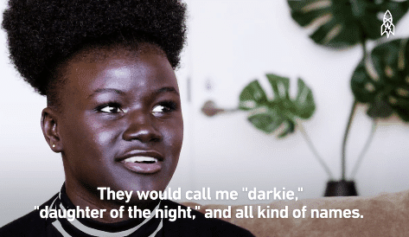
YouTuber Sumaya Smiles demands that East Africans end debates over Blackness and stop acting as if they are better than other Black people across the diaspora.

After being besieged with comments about whether she was Black or pro-Somali, the London-based YouTube culture critic made a Dec. 16 video squashing these petty squabbles on nation and race.

“When you are filling out forms and things like that, what do you click?” she asks rhetorically. “There’s no Somali option. Black African, Black Caribbean, Black other. You are Black.”

She reminded her viewers that this line of thinking, that being Somalian makes a person believe they are better than others, originated from previous generations. When Sumaya was younger, a friend told her that she was Black but not “Black, Black.” Her friend’s statements were shocking because they had the same skin tone.

“I’m like, ‘What do I have to do now to be Black now?'” Sumaya Smiles says. “To be honest, I think it starts with us. If we don’t [classify] ourselves as Black, then what do we [classify] ourselves as being?”

Ultimately, she believes many people just hate themselves.

“There is a group of Somali people that feel that they are better than this kind of African. Or this kind of people that have that kind of texture, that have the more kinky hair,” she explains. “They’re stuck in this kind of [mindset] … that the closer you are to looking Arab, the more beautiful you are. What? Where?”

The YouTuber urged all Black people to just come together, because “no one is better than anyone else.”
Democracy needs journalism it can trust.

This election season, the stakes are higher than usual — and so is the pressure on newsrooms to soften their coverage, stay quiet, or just disappear. Independent reporting, the kind that answers to readers instead of advertisers or political pressure, matters more in a moment like this, not less.

For over 14 years, Atlanta Black Star has stayed independent and reader-funded. We have no corporate owner and no shareholders telling us what to cover or how to cover it. That independence is also our biggest vulnerability: nothing protects it except readers choosing to fund it directly.

Newspaper ad revenue has fallen more than 80% since 2005, and local newsrooms are closing at a rate of roughly two a week nationwide. When outlets go under in a moment like this, it's rarely the independent, reader-funded ones that get to stick around.

We know a request for support isn't why you came here. But without readers choosing to fund this work directly, the depth of reporting we can do at home and abroad shrinks along with everyone else's. If you're not in a position to give, that doesn't change how much we value you as a reader.

If you are able to, a recurring contribution does more for us than a single one-time gift, because it lets us plan the next investigation instead of just the next invoice. It takes about 30 seconds, no long form, no account. Thank you for continuing to support independent journalism and freedom of the press.

Back to top