The grandson of the late Mildred Loving criticizes the latest Hollywood biopic depicting the woman and her husband Richard Loving’s fight to be legally married in 1958.
The film “Loving” — directed by Jeff Nichols and starring Joel Edgerton and Ruth Negga — is about that legal fight striking down Virginia’s Racial Integrity Act that prohibited legal marriages between the races. The 1958 historic Supreme Court decision in Loving v. Virginia changed everything for interracial couples across the country.
While Mildred and Richard Loving made history as the first legal Black and white marriage, grandson Mark Loving disputes the film’s depiction.
In an interview with Richmond, Virginia’s WWBT, Mark Loving states that his grandmother never claimed to be Black.
“I know during those times, there were only two colors: white and Blacks,” Loving explains. “But she was Native American. [In fact,] both of her parents were Native American.”
She really identified as Rappahannock Indian, he says.
Mark Loving adds that she was not aiming to become a civil rights hero; Mildred just wanted to be with her husband. Loving insists that his grandmother would have despised the fact that the family was receiving so much attention.
“She wasn’t trying to be no hero, she wasn’t tryin’ to be no civil rights activist,” he said. “She just wanted to come back to Central Point, Virginia.”
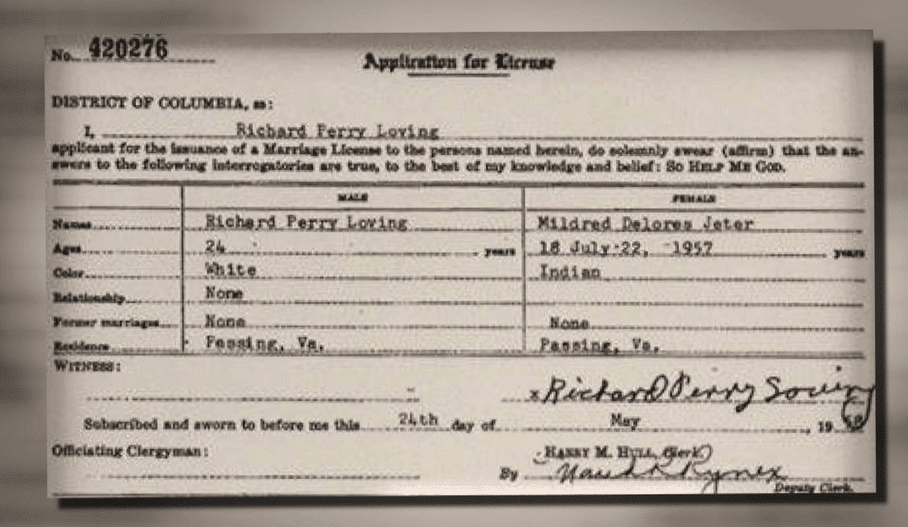
Screenshot of original D.C. marriage license
The couple’s original D.C. marriage license states that Mildred’s race was indeed Native American.