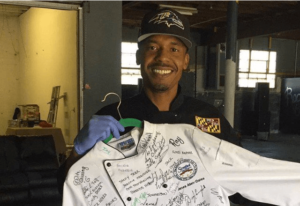
Robert “Chef Stew” Stewart (@chef_stew Instagram)
Robert “Chef Stew” Stewart is launching a new venture in hopes of providing free job training to Baltimore residents.
The Baltimore Sun reported the chef – known for stints on Food Network competition shows like “Cutthroat Kitchen” – is currently raising money to fund Transition Kitchen. The program will provide cooking courses to citizens of the Maryland city.
On the nonprofit side, the Baltimore native is looking to give free weekday instruction to children and adults curious about culinary careers. Weekends will focus on “drop-and-go” catering services and leasing space options for profit.
To fund the project, Stewart opened a GoFundMe account for a $3,000 commercial refrigerator. But he ultimately wants to collect $30,000 for the venture housed in a 3,500-square-foot Baltimore warehouse.
Three $10,000 installments split up the money for various cooking tools. They include one set for additional kitchen equipment and another for proper gas and ventilation installation. The last set is to get training off the ground.
“Transition Kitchen to me is the first time that I’m actually incorporating something of my own accomplishments,” Stewart told the AFRO. “This is not really a Chef Stew thing; this is a Baltimore thing.”
Stewart’s program mostly focuses on teaching youth cooking skills. But the chef, who also appeared on “Guy’s Grocery Games,” hopes to open up the program to other trades too.
“I went in and got childhood friends who are electricians, HVAC [technicians] and plumbers,” Stewart said. “I’m going to be able to use this warehouse for multiple reasons.”
The reality TV chef said he also hopes job creation in his hometown will begin solving issues like police brutality and affordable housing.
To spread the word about needed donations, Stewart told the AFRO he met with various city leaders. They included Baltimore Mayor Stephanie Rawlings.
Still, with the many cries for improvement in the city, the 37-year-old wondered why he hasn’t seen funds pour in more rapidly. But he noted that once the organization reaches its $30,000 goal, it will gain independence.
“Any of the money funded into Transition Kitchen will go directly back to the communities of Baltimore,” he added.