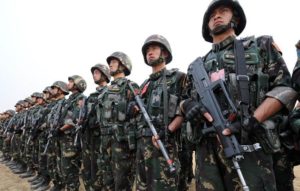
Image courtesy of ActivistPost.com
Over the past five years, the Chinese military presence in Africa has undergone a profound change. Until 2012, the Chinese were happy to play a low-key support role in multinational peacekeeping operations on the continent, preferring to send military engineers and medical staff rather than deploy combat forces. Today, that is no longer the case. China is in fact the eighth-largest supplier of troops for U.N. peacekeeping operations in Africa and the largest among the five permanent Security Council members, according to the European Council on Foreign Relations.
The large and growing Chinese military presence in Africa is also becoming increasingly diverse both in terms of where its forces are deployed and their operational capacity. China’s most sophisticated warships have been actively involved in multinational anti-piracy operations off the coast of Somalia in the Gulf of Aden since 2008. In West Africa, the People’s Liberation Army deployed elite medical units, including a massive hospital ship, to Ebola-ravaged regions in Liberia and Sierra Leone and, similarly, Chinese military medical teams have also been dispatched to the eastern Democratic Republic of Congo where they provide desperately needed health care to the embattled civilian population.
Around 2014, the Chinese began to shift their military engagement strategy in Africa to include the deployment of combat-ready infantry units to countries like Mali and South Sudan where the United Nations peacekeepers are targeted by Islamist radicals and partisan fighters. Although at least three Chinese soldiers have been killed this year in Africa, experts note these PLA combat forces are typically confined to their bases and rarely venture outside the wire. Nonetheless, the fact that the Chinese have taken that first step in redefining their role in African security operations is significant, and with the imminent completion of the PLA Navy’s new outpost in Djibouti, it seems likely that this trend will continue in the coming years.
Read more here.


