Wrongly Convicted Football Player Leaves CNN Host Nearly Speechless as He Breaks Down Role of ‘Privilege’ in Sentencing

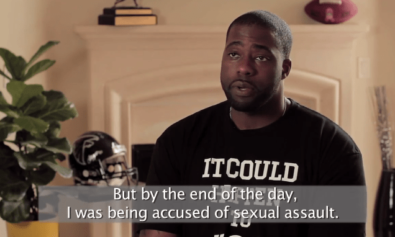
In a Wednesday interview with CNN‘s Brooke Baldwin, Brian Banks — who was wrongly accused of rape in 2002 — speaks out about Stanford University swimmer Brock Turner, who was found guilty of the same act but faces a lesser punishment.

Atlanta Black Star reported that Turner, who is white, was sentenced to only six months of jail time for raping an “unconscious, inebriated” female student in a 2015 incident.

Santa Clara County Superior Court Judge Aaron Persky sentenced the young man to the short prison term because he did not want to harshly punish Turner. Persky feared that prison time would have a “severe impact” on the athlete.

Banks told Baldwin that he was disgusted by the slap on the wrist.

“The judge in this case totally mishandled the situation,” Banks says. “Something has to be done about this and my heart goes out to the victim.”

Banks points out the racial and economic privilege at play in the case.

“The sad thing about this is that Brock was sentenced based on his lifestyle. Because of that, the conclusion was that prison would have a negative impact on him. But what about the children that have no choice about where they are born and who they are born to … When that kid stands in front of that judge, they see all the negative.”

 

Democracy needs journalism it can trust.

This election season, the stakes are higher than usual — and so is the pressure on newsrooms to soften their coverage, stay quiet, or just disappear. Independent reporting, the kind that answers to readers instead of advertisers or political pressure, matters more in a moment like this, not less.

For over 14 years, Atlanta Black Star has stayed independent and reader-funded. We have no corporate owner and no shareholders telling us what to cover or how to cover it. That independence is also our biggest vulnerability: nothing protects it except readers choosing to fund it directly.

Newspaper ad revenue has fallen more than 80% since 2005, and local newsrooms are closing at a rate of roughly two a week nationwide. When outlets go under in a moment like this, it's rarely the independent, reader-funded ones that get to stick around.

We know a request for support isn't why you came here. But without readers choosing to fund this work directly, the depth of reporting we can do at home and abroad shrinks along with everyone else's. If you're not in a position to give, that doesn't change how much we value you as a reader.

If you are able to, a recurring contribution does more for us than a single one-time gift, because it lets us plan the next investigation instead of just the next invoice. It takes about 30 seconds, no long form, no account. Thank you for continuing to support independent journalism and freedom of the press.

Back to top