9 Startling Facts About the First Black Police Officers in Atlanta

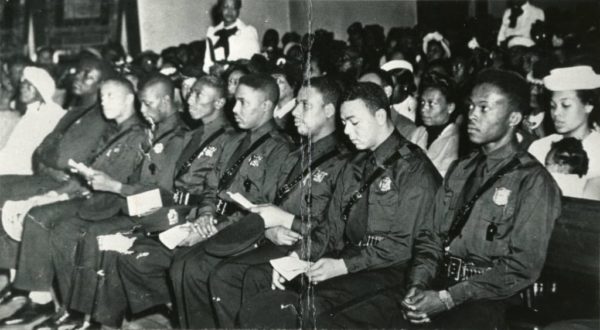
Atlantas-First-Eight-Black-Police-Officers-On-April-30-1948-Georgia-State-University-Library-1024x564

Token Origins

Atlanta Mayor William B. Hartsfield  pushed for the integration of the city’s police force for political reasons, not ethical ones. By the 1940s, the African-American vote in the city became a major factor in winning or losing an election. And Black leaders in prominent communities like Auburn Avenue knew this. They demanded that Black officers be part of the police force. Hartsfield hired eight Black police officers in 1948 and in return he got the Black vote.


With Great Power Comes No Respect or Authority

In 1948, the first Black officers were: Claude Dixon, Henry Hooks, Johnnie Jones, Ernest Lyons, Robert McKibbens, John Sanders, Willard Strickland and Willie Elkins. These men were proud to be on the force but they had no power, respect or real authority in their new roles. This new opportunity brought discrimination from within the department and from the community itself.

They could not arrest whites, ride in patrol cars, or use police headquarters. They first began duty on April 3, 1948 by patrolling Auburn Avenue. The eight carried out their police operations at a nearby Y.M.C.A.
Democracy needs journalism it can trust.

This election season, the stakes are higher than usual — and so is the pressure on newsrooms to soften their coverage, stay quiet, or just disappear. Independent reporting, the kind that answers to readers instead of advertisers or political pressure, matters more in a moment like this, not less.

For over 14 years, Atlanta Black Star has stayed independent and reader-funded. We have no corporate owner and no shareholders telling us what to cover or how to cover it. That independence is also our biggest vulnerability: nothing protects it except readers choosing to fund it directly.

Newspaper ad revenue has fallen more than 80% since 2005, and local newsrooms are closing at a rate of roughly two a week nationwide. When outlets go under in a moment like this, it's rarely the independent, reader-funded ones that get to stick around.

We know a request for support isn't why you came here. But without readers choosing to fund this work directly, the depth of reporting we can do at home and abroad shrinks along with everyone else's. If you're not in a position to give, that doesn't change how much we value you as a reader.

If you are able to, a recurring contribution does more for us than a single one-time gift, because it lets us plan the next investigation instead of just the next invoice. It takes about 30 seconds, no long form, no account. Thank you for continuing to support independent journalism and freedom of the press.

Back to top