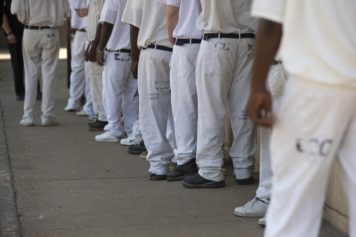
Top Civil Rights Attorney Offers Compelling Argument on Why the Justice System Is an Expensive Continuation of Slavery and Jim Crow

On Friday’s episode of PBS NewsHour, in the latest installment of their “Broken Justice” series, attorney and activist Bryan Stevenson talks about mass incarceration and his Equal Justice Initiative that advocates for prison reform in the U.S.

Stevenson tells NewsHour that many states have fallen short in their effort to make amends for damage to Black communities caused by mass incarceration. The increase in probation and parole supervision are not the proper fixes needed, he said.

In Stevenson’s interview, he goes on to say:

“Well, I think it’s a continuation of using crime narrative to control social and political dynamics that can’t be controlled in more legitimate ways.

And we created this so-called war on drugs, and we targeted people of color, and we got everybody to buy into the fact that if we don’t put these dangerous people into jails and prisons, we are non-safe. And that’s how we went nationwide from a prison population of about 300,000 in the 1970s to 2.3 million today. And now we have the highest rate of incarceration in the world …

I think people realize that we’re spending way too much money on jails and prisons. And I think that’s true in Alabama. It’s true nationwide. We went from $6 billion spent on jails and prisons in the United States in 1980 to $80 billion last year.”

Democracy needs journalism it can trust.

This election season, the stakes are higher than usual — and so is the pressure on newsrooms to soften their coverage, stay quiet, or just disappear. Independent reporting, the kind that answers to readers instead of advertisers or political pressure, matters more in a moment like this, not less.

For over 14 years, Atlanta Black Star has stayed independent and reader-funded. We have no corporate owner and no shareholders telling us what to cover or how to cover it. That independence is also our biggest vulnerability: nothing protects it except readers choosing to fund it directly.

Newspaper ad revenue has fallen more than 80% since 2005, and local newsrooms are closing at a rate of roughly two a week nationwide. When outlets go under in a moment like this, it's rarely the independent, reader-funded ones that get to stick around.

We know a request for support isn't why you came here. But without readers choosing to fund this work directly, the depth of reporting we can do at home and abroad shrinks along with everyone else's. If you're not in a position to give, that doesn't change how much we value you as a reader.

If you are able to, a recurring contribution does more for us than a single one-time gift, because it lets us plan the next investigation instead of just the next invoice. It takes about 30 seconds, no long form, no account. Thank you for continuing to support independent journalism and freedom of the press.

Back to top