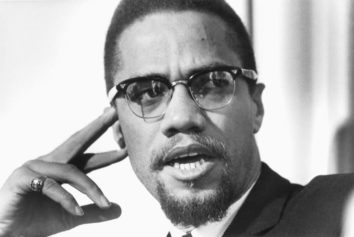
A background discovery is expected to take place Tuesday, as archaeologists search the old stomping ground of African-American leader and prominent figure, Malcolm X.
Boston archaeologists are scheduled to search Malcolm’s childhood home with the hope of learning more about his earlier years. Organizers said construction is expected to last two weeks in Boston’s Roxbury neighborhood.
Born Malcolm Little on May 19, 1925 in Omaha, Nebraska, he was one of eight children. Malcolm’s earlier years with his parents were known to be unstable. His father was an outspoken Baptist minister and avid supporter of Black Nationalist leader Marcus Garvey. His father’s civil rights activism prompted death threats from the white supremacist organization Black Legion, forcing the family to relocate twice before Malcolm’s fourth birthday.
Malcolm’s father was tragically murdered, causing his mother to suffer an emotional breakdown. As a result, Malcolm and his siblings were split up and separated among various foster homes and orphanages. As a teenager, he began living with his sister’s family in Roxbury in the 1940s.
Roxbury currently serves as the heart of Black culture in Boston. Hundreds of new businesses and housing initiatives have revitalized the neighborhood’s Dudley Square, Crosstown and Grove Hall areas. It is home to the historic Shirley Eustis House, the only remaining country house in America built by a British Royal Colonial Governor.
As the voice of the Nation of Islam, Malcolm promoted Black pride and national radicalism in the 1950s and 60s and exhorted Blacks to cast off the shackles of racism by any means necessary — including violence. Malcolm X’s legacy has moved through generations as the subject of numerous documentaries, books and movies, and continues to radicalize lives today.
Members of his family and community residents are expected to help Boston’s Archaeology Lab and researchers from the University of Massachusetts-Boston as they undertake the excavation.