Some people think legalizing marijuana might slow down the numbers of Black men who are arrested, since they are often incarcerated on drug charges. But they might want to think again. Several news reports say that Black people are still being arrested for marijuana possession, even in states where it’s legal such as Colorado and Washington.
According to a study of FBI crime statistics by Mike Males, a senior research fellow at the Center on Juvenile and Criminal Justice, Black men in both states were twice as likely to be arrested for marijuana.
This is because law enforcement officials are directly targeting Black people for arrest. According to figures from the American Civil Liberties Union, Blacks were 3.73 times more likely to be arrested for marijuana, even though Blacks and whites use drugs at roughly the same rate.
This seems to be a problem of selective enforcement, just like the New York Police Department’s notorious stop-and-frisk policy, which was eventually declared unconstitutional. The law aimed to deter crime by stopping people who were carrying contraband (drugs and weapons.) However, most of the people stopped were Black and Latino males, even though data showed that white people were more likely to be carrying contraband. In an analysis of 2012 NYPD statistics, the Public Advocate said officers found contraband on white people in one of 49 stops. But they only found contraband on Black people in one out of 93 stops and on Latinos in one of 71 stops.
In a Washington Post article, Males said he was disappointed that legalization hadn’t reduced the number of Black men being arrested on drug charges, which was of the goal of decriminalizing marijuana.
“I am surprised and disappointed by this,” sad Males. “The forces that contribute to racial disparities under prohibition are clearly still in place after legalization.”
The war on drugs locked up thousands of Black men, like former drug kingpin “Freeway” Rick Ross, who saw the narcotics trade as a way to fund legal business ventures. But now Black men are being frozen out of the legal marijuana business, which is dominated by white men.
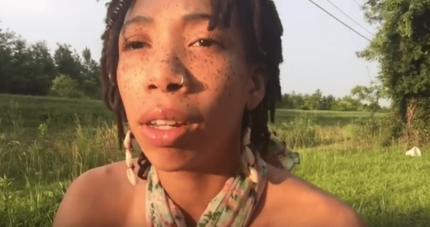
According to a BuzzFeed article called “How Black People Are Being Shut Out of America’s Weed Boom,” all the states that have legalized marijuana for recreational or medical use ban people with drug charges from working in the industry. So Black people, who learned how to cultivate marijuana when it was illegal but got busted, can’t work in the industry now that it’s legal. And, according to the BuzzFeed article, it takes about $250,000 to start up a legal marijuana business. Both of these reasons leave people like Unique Henderson, who has two drug felonies, frozen out.
“It really does piss me off,” Henderson told BuzzFeed. “And to see a lot of people come to Colorado to work in weed, that pisses me off even more. They’re coming here, living comfortable, and it’s like, I could be doing the same thing, but I can’t, because of my past with marijuana.”