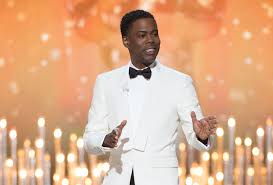
Hosting the Academy Awards is often called the most thankless job in entertainment. The host, often a comedian, has the unwinnable and unrewarding job of poking fun at the most prestigious movies at the most buttoned-up and serious event in all of Hollywood.
Eleven years ago, at the 77th Academy Awards, Chris Rock suffered the sting of the so-serious Oscars. Things are really bad when Sean Penn’s overly sensitive defense of actor Jude Law was the night’s highlight. Rock didn’t master Billy Crystal’s method of being “Academy funny,” and many thought he would never host again.
When producers David Hill and Reginald Hudlin tapped Rock to return, there was a collective sense of ‘Why’? Then, the Academy failed to nominate a single Black person for the second year straight. Next, #OscarsSoWhite began to trend again. Finally, Hollywood’s lack of diversity became an overshadowing topic heading into the show, and several prominent Black actors decided to forego the ceremony.
In the weeks leading up to Sunday, Rock became the show’s biggest asset. Armed with his one-two punch of pointed commentary on race and scathing social commentary, an odd yet perfect union was formed, turning Sunday night’s opening monologue into the biggest moment of this year’s so-serious Oscars.
Rock didn’t disappoint. Swaggering on stage to Public Enemy’s “Fight the Power,” Rock delivered one the best opening monologues in the show’s history.
He opened with a nice jab.
“Man, I counted at least 15 Black people on that [show-opening] montage. I’m here at the Academy Awards, otherwise known as the White People’s Choice Awards.”
He discussed what would have happened if he chose not to host the show.
“So, I thought about quitting. I thought about it real hard. But, I realized, they’re gonna have the Oscars anyway. They’re not gonna cancel the Oscars because I quit. You know? And the last thing I need is to lose another job to Kevin Hart, O.K.?”
Rock wasn’t one-sided in his approach, and addressed why Black artists chose to boycott the Academy Awards this year.
“You gotta figure that it happened in the ’50s, in the ’60s — you know, in the ’60s, one of those years Sidney [Poitier] didn’t put out a movie. I’m sure there were no Black nominees some of those years. Say ’62 or ’63, and Black people did not protest. Why? Because we had real things to protest at the time, you know? We had real things to protest; you know, we’re too busy being raped and lynched to care about who won best cinematographer.”
Rock saved his furious haymakers to address Hollywood and racism.
“But here’s the real question. The real question everybody wants to know, everybody wants to know in the world is: Is Hollywood racist? Is Hollywood racist? You know, that’s a…you gotta go at that the right way. Is it burning-cross racist? No. Is it fetch-me-some-lemonade racist? No. No, no, no. It’s a different type of racist. But it ain’t that racist that you’ve grown accustomed to. Hollywood is sorority racist. It’s like, ‘We like you Rhonda, but you’re not a Kappa.’ That’s how Hollywood is.”
Rock kept the punch lines flowing, including introducing a “Black History Month Minute” narrated by Angela Bassett, which paid tribute to an important “Black” actor who was in Enemy of the State and Shark Tale: Jack Black.
From introducing Michael B. Jordan as a “shoulda-been nominee” and Stacey Dash as the Academy’s “New Director of Minority Outreach,” to helping his daughters sell more than $65,000 worth of Girl Scout cookies during the telecast, Rock kept the crowd weary and unsure of where he was going next. The Black do-over of several films from this year included a parody of The Martian, where Rock was stranded on Mars and Jeff Daniels and Kristen Wiig refused to waste 2,500 “white dollars” to rescue him.
Rock saved his best punch for the night’s ending: “I’d like to invite everybody to the BET Awards this summer.”
His final haymaker of the evening helped put what was most important into focus: “Black Lives Matter.”


