 A United Nations team recently visited the United States to study the condition of Black people and was alarmed at what they found. According to a report by the Working Group of Experts on People of African Descent, there are wide disparities in the way Black people are treated in America, especially in the areas of criminal justice, education and health.
The Working Group stated that Black people still face structural racism and discrimination in America.
“The colonial history, the legacy of enslavement, racial subordination and segregation, racial terrorism, and racial inequality in the U.S. remains a serious challenge as there has been no real commitment to reparations and to truth and reconciliation for people of African descent,” according to the Working Group’s report. “Despite substantial changes since the end of the enforcement of Jim Crow and the fight for civil rights, ideology ensuring the domination of one group over another, continues to negatively impact the civil, political, economic, social and cultural rights of African Americans today.”
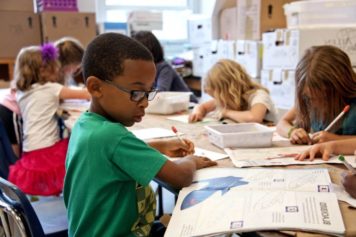
The Working Group, which visited Washington, D.C., Baltimore, Jackson, Miss., Chicago and New York City, was particularly alarmed by problems in America’s education system. Black students face harsher punishment and are more likely to be suspended and expelled than white students. Some schools operate harsh, zero-tolerance policies, backed up by law-enforcement officers operating in schools.
Niya Kenny, a South Carolina student who filmed her classmate being assaulted by a school police officer, also testified in front of a U.N. panel about racial discrimination in schools. She was arrested for filming the incident.
“I felt like I had to stand up for my sister right then and there,” she said during her testimony. “That could have been anyone right there.”
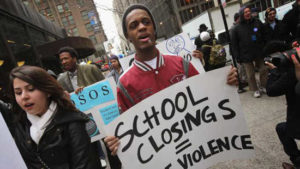
According to The Huffington Post, the U.N. team also expressed concern about mass school closures, which have affected Black neighborhoods in Chicago and Philadelphia. In Chicago, children have to travel through gang-infested areas to get to new education institutions after their neighborhood school was closed.
The Working Group also talked about police violence.
“The Working Group met with a considerable number of relatives of African-Americans killed by police officers that are still seeking justice for their loved ones including Tyrone West, Tyron Lewis, Jonathon Sanders, Oscar Grant, Tony Robinson, Marlon Brown, India Kager, Ronald Johnson, Mohamed Bah and Alonso Smith,” said the report. “Despite some efforts made by the Department of Justice, there is still a lack of an official national system to track killings committed by law enforcement officials. Unofficial sources, such as The Washington Post and The Guardian, identified between 38 and 75 cases of unarmed African Americans killed by the police in 2015.”
The U.N. team made specific recommendations to the U.S. government. Here are some of their suggestions:
- They recommend the U.S. government establish a national human rights commission to monitor the condition of Black people.
- The U.S. should ratify the core international human rights treaties, of which the U.S. is not a party.
- The Working Group also recommended the government recognize the devastating effects of the transatlantic slave trade. The U.N. team said the slave trade was a “crime against humanity” and the effects could still be found in widespread discrimination against Black people. The Working Group also said racial discrimination needed to be addressed by “reparatory justice.”
- The group recommended the Department of Education study the effect of zero-tolerance policies on Black students.
- They also recommended the government study extrajudicial police killings and use of excessive force by police officers.
The recommendations came from the Working Group’s initial findings. The group will give a full report to the United Nations in September.