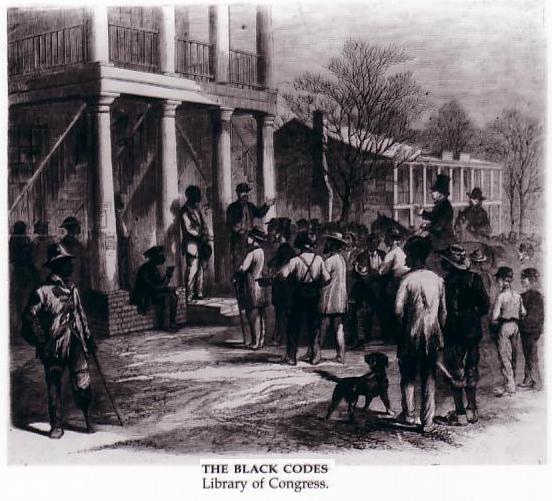
The Condition of Black People
Life under the codes made the daily conditions for Black people unlivable. In Saint-Domingue, there were laws restricting economic movement, self-defense and social mobility. To be an enslaved person under the codes was to be treated like property or a pet.
In Article XXXI, legal rights were removed from Black people:
Slaves shall not be a party, either in court or in a civil matter, either as a litigant or as a defendant, or as a civil party in a criminal matter. And compensation shall be pursued in criminal matters for insults and excesses that have been committed against slaves. . . .
In an attempt to prevent rebellions and violence, enslaved people who wanted to free themselves could not. Article XXXIII reads:
The slave who has struck his master in the face or has drawn blood, or has similarly struck the wife of his master, his mistress, or their children, shall be punished by death. . . .
The laws were barbaric in principal and in practice. Article XXXVIII shows the savage treatment inflicted on runaway enslaved people:
The fugitive slave who has been on the run for one month from the day his master reported him to the police, shall have his ears cut off and shall be branded with a fleur de lys on one shoulder. If he commits the same infraction for another month, again counting from the day he is reported, he shall have his hamstring cut and be branded with a fleur de lys on the other shoulder. The third time, he shall be put to death.
 Louisiana
In 1724, the Black Codes made it to Louisiana. It created a caste system that would “organize” its mixed society and alienate, subjugate and disenfranchise the Black population. The codes were in effect from 1724 to 1803. During that time Black people could not own anything that could be used as a weapon such as a cane or stick. After the Louisiana Purchase of 1803, the same fear of Black people prompted the planters to disarm the free Black militia. They also did not want Blacks to have positions of authority that required guns.
The codes also went as far to eliminate all forms of integration. For example in Article VI of the code, “[the French crown] forbid our white subjects, of both sexes, to marry with the blacks, under the penalty of being fined and subjected to some other arbitrary punishment,” which the original code allowed.