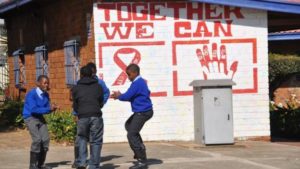
 South Africa’s minister of education openly admits that the country’s schools are in a state of crisis. How did we get here and what needs to be done?
Angie Motshekga did not mince her words when she addressed her colleagues at a recent African National Congress gathering.
“If 25% [of students] fail, we must have sleepless nights,” she is quoted in local media as saying. “This is akin to a national crisis.”
The shocking statistic is that some 213,000 children failed their end of school examination for the academic year ending last month, out of a total of nearly 800,000.
But that is just half the story, as there is also a massive dropout rate.
According to Stellenbosch University’s Professor Servaas van der Berg, out of the 1.2 million 7-year-olds who enrolled in Grade 1 in 2002, slightly less than half went on to pass their school-leaving exam, the matric, 11 years later.
This is not about a lack of funding. In fact, South Africa spends more on education, some 6% of GDP, than any other African country.
But quality education for everyone is not there, as in many global studies South Africa often comes near the bottom in math and science tests.
The cancer lies deep in the education system and the continuing legacy of apartheid, and parents know this.
One of the most depressing sites in post-apartheid South Africa is the busing of Black children out of townships like Johannesburg’s Soweto.
Children are packed like sardines into mini-buses and driven long distances, some over 30km (19 miles) away, to the schools in the former whites-only suburbs.
Some will be traveling to private schools, but the majority go to the state-funded schools which are better resourced and have better teachers than their equivalents in the townships, mirroring the situation during apartheid.
Read more at www.bbc.com