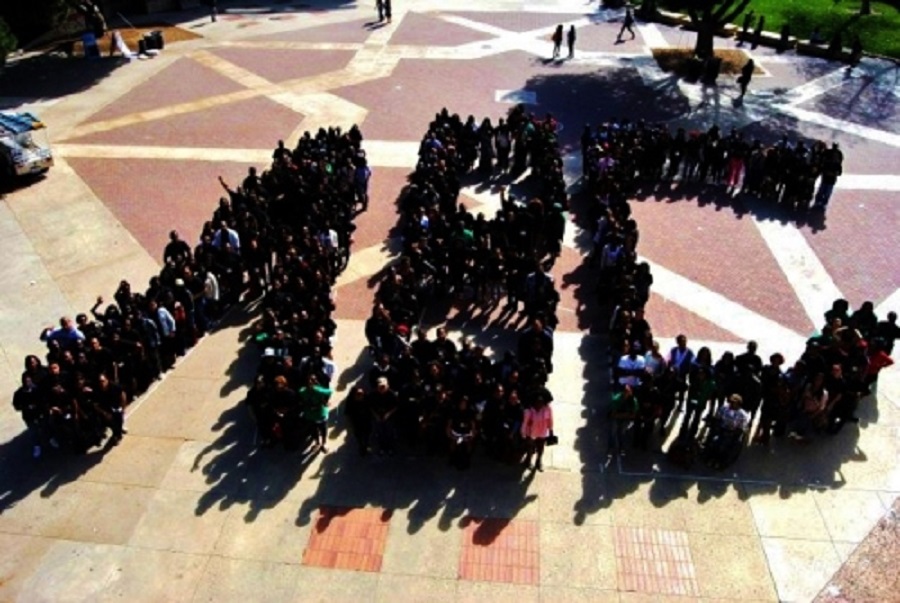
University of California Afrikan Black Coalition
As Atlanta Blackstar reported in December, Black students at the University of California system—known collectively as the Afrikan Black Coalition—led an effort to force the university to divest millions of dollars in private prisons. That initiative has paid off. The institution agreed to sell off its assets in the unsavory trade of prisons for profit, which total as much as $30 million in corporations such as GEO Group Inc. and the Corrections Corporation of America.
In December, the Black Student Unions of the nine undergraduate UC campuses passed a resolution demanding that the university system divest from private prisons and ban all future investments. Further, the students called for a divestment from Wells Fargo as long as it profits from prison privatization, and a reinvestment of the revenues in education or businesses owned or run by formerly incarcerated people.
“Every University of California campus administration has stated that they are interested in investing in black students and increasing their black student population. But how is that possible when they are investing in a system that has perpetually dehumanized, displaced, and destroyed the black person?” asked Jazzalyn Livingston, a member of the student coalition who recently earned psychology and public health degrees from UC San Diego. “Almost every black male in my family has been incarcerated at some point in their lives and that’s not a coincidence,” she told Fusion.
“This victory is historic and momentous. Divesting $25 million is a good step towards shutting down private prisons by starving them of capital,” said ABC Political Director, Yoel Haile. “This is a clear example of Black Power and what we can achieve when we work in unity. This victory belongs to the masses of our people languishing behind America’s mass incarceration regime.”
However, despite this victory for student activism and social responsibility, the students note that their work is not over. There is still the issue of Wells Fargo Bank. The ABC divestment resolution demanded that the UC appropriately deal with the $425 million it has invested in the financial institution. And divestment is not complete until the university divests from what they call the “morally bankrupt” Wells Fargo, unless Wells Fargo cancels its business with private prisons.
According to the students, “Wells Fargo Bank has never been the ally of Black, working class and migrant people or the intersection thereof. Like many banks, Wells Fargo is well known for their discriminatory lending practices in Black and Brown neighborhoods.” Further, ABC argues that Wells Fargo serves as a syndication agent and issuing lender for CCA’s $900 million credit line. Further, Wells Fargo is a trustee for Geo Group’s $300 million corporate debt, and as a Million Shares Club member, owns over 1 million shares in CCA and Geo Group. This means that Wells Fargo is benefiting from and supporting the exploitation of Black people and migrant people. Further, investing in private prisons and benefiting from the mass incarceration runs counter to UC investment practices against “rapid gains that vanish quickly if they are rooted in corruption, fraud or falsification.”
“In order for the UC’s mission to be fulfilled, it is imperative to assess investments not only from a risk perspective, but from a socially responsible perspective as well,” said Kamilah Moore, ABC Field Organizer. “Our campaign is not over. We will continue to call for complete divestment, increased transparency, and reinvestment in education and businesses owned or controlled by the formerly incarcerated.”
The UC Black students warn that if the university fails to sell its $425 million in Wells Fargo holdings, it will have to contend with their “fearless” statewide coalition, whose “patience is quickly reaching its limit” and is “intent on contributing their part to the Black Freedom Struggle.”
These students are not playing around. They say they plan to do this by any means necessary, and they should be taken seriously. But then again, prisons are serious business, and our moral legacy is at stake. And as the UC has learned, investing in the misery of poor, Black and Brown people will not be tolerated by a new generation of young Black leaders.