First Ever ‘Made in Ghana’ Car Is Prepared to Enter Marketplace

kwadwo safo

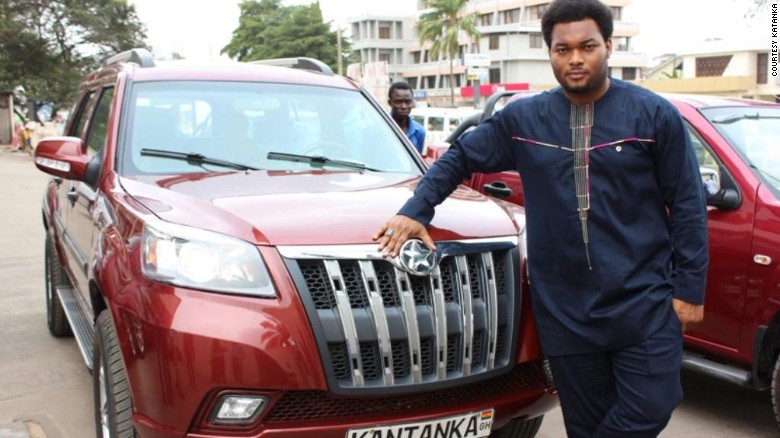
Kwadwo Safo Jr, CEO of Kantanka Group

The first cars to carry a “made in Ghana” seal will be under a harsh spotlight as they prepare to enter the marketplace and take on the major international brands.

The man that made it happen is under no illusions about the difficulty of the task.

“The biggest challenge is people believing (and) having faith in the car,” says Kwadwo Safo Jr, CEO of Kantanka Group — the nation’s first manufacturers. “People think the doors will come off or the tires will blow off or something.”

To prove the Kantanka models are tough enough for local conditions, Safo gave them a baptism of fire serving the Ghanaian police.

“They rough handle cars a lot,” he says. “They took the car, and made it appeal to the masses.”

“These cars are made for Ghana. We know how the roads are, and we built them to stand the roads.”

Despite positive reviews, Kantanka Group faces another challenge as a small operator seeking to compete with established rivals. The manufacturing base in Accra can produce just 100 cars month, and with high costs, the cheapest of three models costs around $20,000.

But given the rapid progress until now, such difficulties do not deter Safo from dreaming, and his dreams are not limited to the domestic market.

“We’ve gotten this far because we believe in the possibilities,” he says. “One day we will be all over the world.”

Read the full story at cnn.com

Democracy needs journalism it can trust.

This election season, the stakes are higher than usual — and so is the pressure on newsrooms to soften their coverage, stay quiet, or just disappear. Independent reporting, the kind that answers to readers instead of advertisers or political pressure, matters more in a moment like this, not less.

For over 14 years, Atlanta Black Star has stayed independent and reader-funded. We have no corporate owner and no shareholders telling us what to cover or how to cover it. That independence is also our biggest vulnerability: nothing protects it except readers choosing to fund it directly.

Newspaper ad revenue has fallen more than 80% since 2005, and local newsrooms are closing at a rate of roughly two a week nationwide. When outlets go under in a moment like this, it's rarely the independent, reader-funded ones that get to stick around.

We know a request for support isn't why you came here. But without readers choosing to fund this work directly, the depth of reporting we can do at home and abroad shrinks along with everyone else's. If you're not in a position to give, that doesn't change how much we value you as a reader.

If you are able to, a recurring contribution does more for us than a single one-time gift, because it lets us plan the next investigation instead of just the next invoice. It takes about 30 seconds, no long form, no account. Thank you for continuing to support independent journalism and freedom of the press.

Back to top