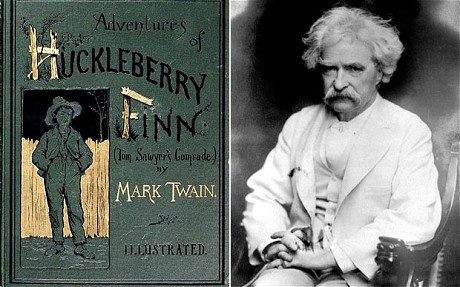
 Mark Twain’s classic book portrays the relationship of the a white runaway and an escaped enslaved kid. When it was first released in 1885, it was censored for showing an interracial friendship/relationship. The book’s portrayal of Black people and the liberal use of the N-word is up for discussion today.
The book is a product of its time and it showcases the racial violence, subjugation and dehumanization of Black people that this nation still is dealing with today. The Adventures of Huckleberry Finn should be utilized to teach people not to be racist and reveal that the United States of America built its wealth off of the free labor of enslaved Black people.
Many schools have become sensitive to the book’s content but that sensitivity may be a disservice to racial progress in the country because racism is brutal and it just can’t be watered down. Earlier this year, an incident in Texas revealed that school textbooks called enslaved Black people immigrants and workers which is completely false.
This quotation from chapter eight shows that America penalized and socially ostracized whites who saw the immoral nature of the institution of slavery and wanted to abolish it.
“People will call me a low down Abolitionist and despise me for keeping mum—but that don’t make no difference. I ain’t agoing to tell, and I ain’t agoing back there anyways.”
This is another chapter eight quote that implies that Black people aren’t intelligent even though enslaved people were not allowed to read or write. Teachers should take time to discuss this and discuss the reality of a person being brought and sold.
“Yes—en I’s rich now come to look at it. I owns myself, en I’s wuth eight hund’d dollars. I wisht I had de money, I wouldn’ want no mo’.”
In this quote from chapter 14, Huckleberry Finn is clearly a racist that is shifting from his racist perceived notions of Black people. But he is still holding on to racist ideologies and thinks that Black people lack the cognitive ability to be reasonable.
“Well, he [Jim] was right; he was most always right; he had an uncommon level head, for a n****r.”
This following quote is from chapter 15:
“It was fifteen minutes before I could work myself up to go and humble myself to a n****r—but I done it, and I warn’t ever sorry for it afterwards, neither.”
The book should serve as a reminder that Twain was considered liberal in this thinking at the time, which is mind blowing by today’s standards. If this country wants to improve on the issue of race, there isn’t any time to be timid and passive.