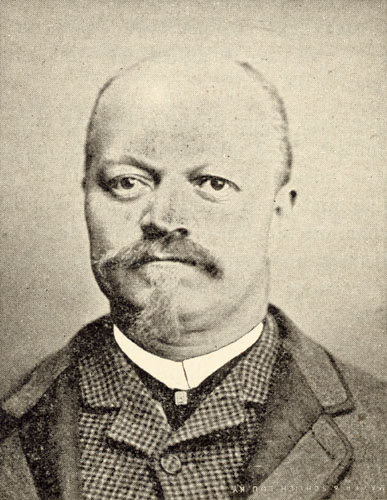
Warren C. Coleman, a former enslaved African, built first textile mill owned and operated by African Americans
Warren C. Coleman Mill in Concord, North Carolina has finally received national recognition this year by being placed on the National Register of Historic Places.
According to the Charlotte Observer, the Warren C. Coleman Mill is the first African-American owned and operated textile mill.
“It was built as part of a noble experiment. It harbored a dream that a textile mill could be built and operated by persons of color,” said Cabarrus County Superior Court Judge Clarence Horton in a local cable program on the mill and its founder, Warren C. Coleman.
The Mill’s founder, Warren C. Coleman, was a former enslaved African. Coleman came from eager beginnings. He began his business career in 1871 collecting rags, bones, and junk. Soon he started a combination barbershop and candy store in Concord. The Charlotte Observer mentions that after Coleman opened his store, he took business classes at Howard University, later branched out into real estate and built more than 100 rental homes. With his wealth in hand, Coleman persuaded other African-Americans to invest in the mill.
“It was a game-changer for the African-American community because they had no place to be gainfully employed, except in homes of some (white) people. They were not used to paying blacks. They were their former slaves, so this (the mill) represented that dream for blacks to be able to purchase land, a business and be self-sustaining,” Rev. Donald Anthony, the Chairman of the Historical Association of Concord, said to the Charlotte Observer.
WFAE mentions that Coleman built the mill with hard wood floors, bricks made on site and floor to ceiling hard pine wood beams that are still sturdy today. At its height, the mill employed just over 300 African-Americans to make yarn. But Coleman also envisioned a school, mill village housing and other businesses on site.
Coleman wanted the mill to be operated by African-Americans, but he had to bring in a few whites because insurance companies would not sell policies to black-owned businesses. The mill’s equipment was refurbished and required lots of maintenance because Coleman could not secure loans for new machinery. But even with setbacks, the mill opened in 1901.
Facts on File states that although the mill was finally able to begin operations in June 1901, the cotton market was at its lowest point since the Civil War.
In December 1903, Coleman was asked to resign from his post as secretary treasurer, and a white merchant and cotton buyer replaced him. Finally, in June 1904, the property went into foreclosure. In 1906, the mill became the property of J. W. Cannon, the white textile entrepreneur whose Cannon Mills still operates the property today as Fieldcrest Cannon Plant #9. Coleman did not live to see the loss of his mill. He died on March 31, 1904.
According to the Charlotte Observer, current owner, Bill Bryant, ran a large printing operation out of it for a time and leases a large portion of the mill. He tells Charlotte Observer that he has no plans to demolish the property and plans to ensure that his children maintain it.
Additionally, there’s talk of possibly putting an African-American museum in the mill.