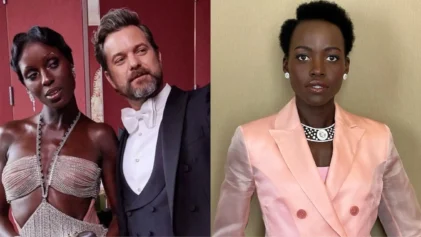
 Lupita Nyong’o’s rapid ascension into fame has been told to the point of mystification: while still attending the Yale School of Drama, she was cast in 12 Years a Slave as Patsey. Her performance won her an Oscar for Best Supporting Actress.
The win catapulted her into instant celebrity status and global stage obsession. She was named People’s 2014 Most Beautiful Person, and has graced every mainstream magazine cover from W to Vanity Fair.
Gifted with super human powers of infectious personality and impeccable style, she’s smashed traditional notions of black beauty around the globe. However, like most myths, her origin is steeped in all too human pain and rejection.
“I was too dark to be on TV,” Lupita said in an interview with The Guardian. Lupita was auditioning for a commercial in her native Nairobi, Kenya. The casting agent’s rejection rocked her core but also strengthened her resolve. “That was not fun to hear. But I just didn’t accept it. It hurt, you know. And I cowered. But I didn’t accept it, actually. That’s the truth.” It was her mother who encouraged her to continue to, “do anything you put your mind to.”
This train of thought inspired her to explore colorism as a filmmaker. Her final thesis project while attending Hampshire College as an undergrad was a documentary called In My Genes. The documentary follows the day to day lives and difficulties of several albino Kenyans.
This documentary was the first step in her discovery process of the societal limitations placed on people because of their skin color. “To think that I was on the other end of the colour spectrum, when it comes to my complexion, yet we were experiencing similar discrimination. I think that’s what drew me to that subject.”
Lupita’s current status shows there is a new hope beyond colorism; there is potential for the perception to be changed. In years to come, her legend as an ambassador for change in the way black beauty is viewed will grow. Growth is an excruciating but beautiful process that teaches endurance and inspired Lupita to persevere toward what she wanted most, “It didn’t occur to me that I should change what I wanted to do. I needed to change how I was going to do it.”