 The struggle to uphold Black lives amid a culture of racial violence has become a fight to withhold Black dollars as well. Voices in the Black community have connected the dots and now understand the link between their continued suffering and the need to leverage their dollars in order to get the nation’s attention, and help the greater society understand that Black people mean business.
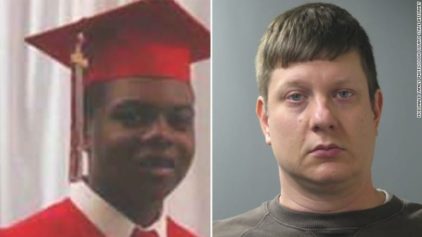
In Chicago, activists blocked the entrances to shops on North Michigan Avenue, known as the Magnificent Mile, to protest the police shooting death of Laquan McDonald by Jason Van Dyke, a white police officer. And the tactics proved a success. Black Friday sales were 25 to 50 percent below expectations on the busiest shopping day of the year, according to the Chicago Tribune. Retailers concluded that the protesters had a considerable negative impact on their sales.
“We were down a lot,” Sarah Midoun, a sales associate at Aldo shoe store, told the Tribune. “We were budgeted to make $37,000 but we only did $19,000 — customers told us they were concerned. If anything the police were kind of encouraging [protesters who blocked the entrance to the store] by allowing it,” she said. She added that if the police had been too aggressive, “people might have rioted.”
“I don’t feel like it was very legitimate. We should be helping the economy, not hurting it,” said Slade Thackeray, general manager of Garmin’s flagship Chicago store, one of several that closed five hours early due to the protest. Sales were down 30 to 40 percent as a result.
The Chicago Tribune also reported that Black Friday sales at Men’s Wearhouse were down from $19,000 last year to less than $10,000 this year. Further, at the Stuart Weitzman shoe store, sales were $20,000 lower than the $50,000 the store had predicted. Meanwhile, nationwide, Black Friday in-store sales dropped 10 percent from $11.6 billion to $10.4 billion, as shoppers decided to shop online, according to ShopperTrak.
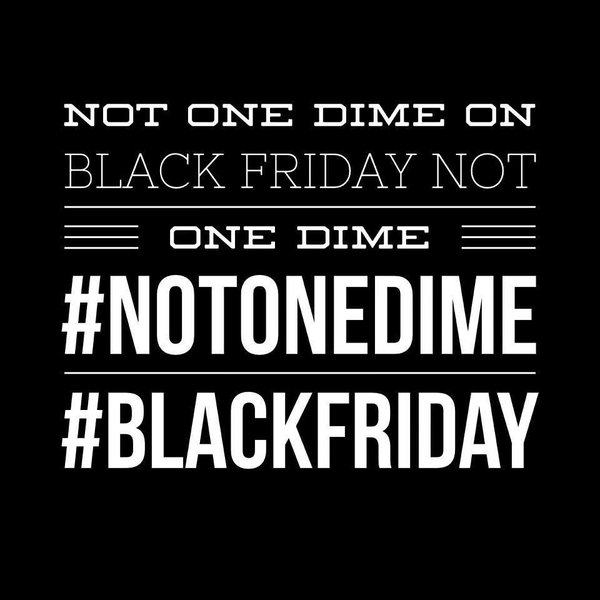
The #NotOneDime campaign—which this year lasted from Thanksgiving to November 30– was launched last year after a grand jury failed to indict police officer Darren Wilson in the death of Michael Brown in Ferguson.
“My hope is that the 2015 boycott will again channel our collective community rage towards an economic boycott that empowers people of all ages and ethnic groups to participate in economic resistance,” said Rahiel Tesfamariam, the founder and publisher of Urban Cusp, who started the #NotOneDime hashtag.
Tesfamariam told the Guardian that the goal of the boycott is to remember the victims of state violence and unite poor Black communities by demonstrating their collective buying power. The boycott is also designed to unite poor African American communities and demonstrate their collective purchasing power “in opposition to a broken system that condones institutionalized racism.”
“With the $1 trillion buying power of the African American community, it is absolutely necessary to withhold our hard-earned earnings from a broken system that often values property over people,” Tesfamariam said.
According to Nielsen, African-American spending power is forecasted to increase to $1.3 trillion by 2017.Noting last year’s 11 percent drop in spending and a bleak Black Friday forecast, Tesfamariam also noted that companies cannot ignore the freeway shutdowns and mall die-ins that block consumers from shopping at the stores.
One person who decided not to partake in Black Friday shopping was Lucia McBath, mother of Jordan Davis, 17. For this mother who lost a Black son, the issue is personal. Davis was killed by a white gunman on November 23, 2012—the day after Thanksgiving— at a Jacksonville, Florida gas station over loud music. The incident and the ensuing trial, in which the man invoked the “Stand Your Ground” law of self-defense, were chronicled in the HBO film, 3 ½ Minutes. McBath recently told Democracy Now! that her family had enjoyed Thanksgiving before her son was killed, and her son looked forward to shopping the following day.
“And he actually told me, you know, ‘I’m going to go shopping and hang with my friends and everything. We’re going to go shopping on Black Friday.’” McBath said. “He was really excited about that, because he had already decided what he wanted to purchase on Black Friday.”
Jordan’s killer, Michael Dunn, was convicted of murder and sentenced to life imprisonment.
The #NotOneDime boycott has been followed by a #BlackDecember campaign, urging Black consumers to refrain from shopping, with anyone except African-American owned businesses. Black America’s boycott of the holiday season is a resounding success, proving that the community can organize and tell America that it will no longer finance its oppression.
There are some who will complain about the boycott and the impact it is having on the bottom line during this crucial time of the year. And that is precisely the point. Boycotts may harm the sales of some businesses, but just imagine how we all benefit when we create a fair and just society.