
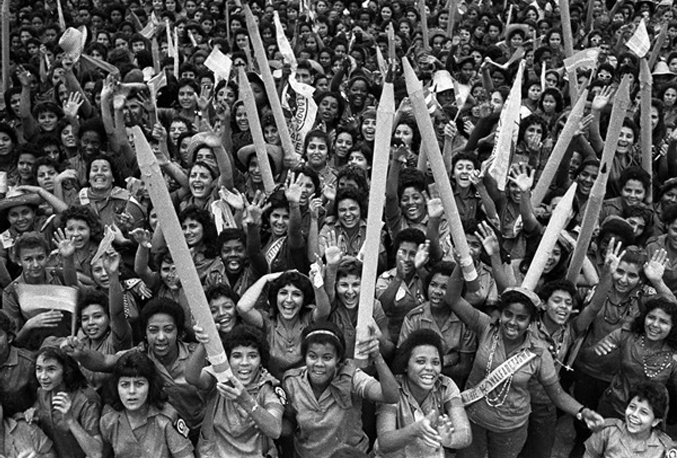
The revolutionary youth led the movement.
Blum conveys that the movement consisted of roughly 100,000 teenage literacy workers of all ethnicities who would “go to the remote areas of the island to live and work with campesino families.” The term “campesino” is used to describe peasant farmers. These literacy workers would assimilate into a rural setting, work during the day, and teach all ages to read and write at night. This was often an eight-month visit.

Within one year, the Cuban Literacy Campaign significantly reduced the illiteracy rate.
Abendroth states that “students between the ages of 10 and 19 who carried in their knapsacks a pair of boots, two pairs of socks, an olive-green beret, a blanket, a hammock, a lantern, and copies of a teacher’s manual and a student primer” set out to educate the nation. As a result, throughout the campaign, illiteracy decreased from a rate of 23.6 percent to a rate of less than 3.9 percent during the first year of the Literacy Campaign.


