7 Intriguing Facts About the Women of Black Suffrage Movement You May Not Know

Portrait of American journalist, suffragist and Progressive activist Ida Wells Barnett (1862 - 1931), 1890s. (Photo by R. Gates/Hulton Archive/Getty Images)

Ida B. Wells-Barnett (July 16, 1862 – March 25, 1931)

Journalist and civil rights activist Wells-Barnett used her platform to combat the unjust practice of lynching in the nation and to fight for Black women’s right to vote. In 1892, two of her male colleagues were lynched by a white mob in Memphis, TN and this event propelled her into the anti-lynching fight wholeheartedly. She marched in several national suffrage parades, lectured, and founded one of the first Black woman suffrage organizations – the Alpha Suffrage Club of Chicago in 1913. According to the University of Northern Illinois archive, she fought against the National American Woman Suffrage Association (NAWSA) which aimed at getting white women the right to vote but did not want to allow Black women into their organization. However, in Chicago, Wells-Barnett found common ground among white women who were eager to utilize her speaking ability for recruitment and canvassing.
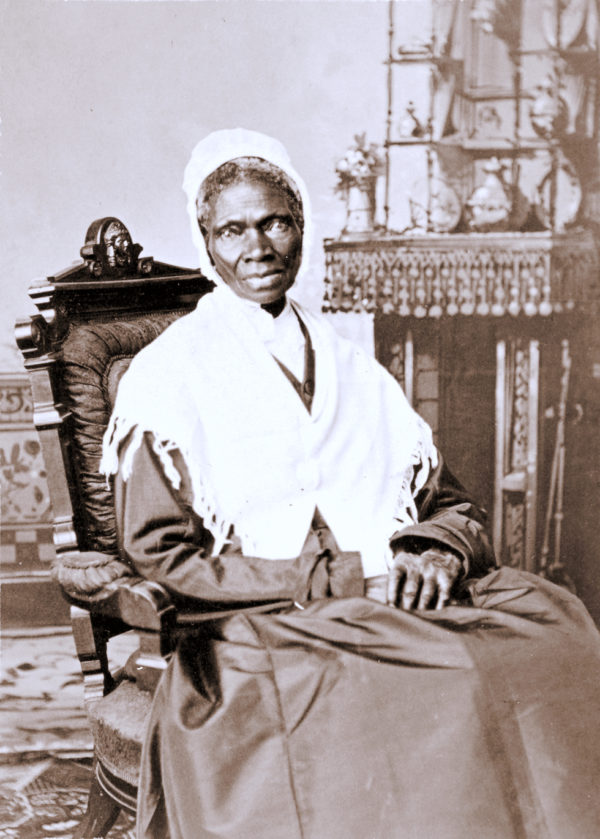
 

Sojourner_truth_c1870

Sojourner Truth (c. 1797 – Nov. 26, 1883)

The abolitionist, preacher, and fighter for Black women’s rights was born into slavery in New York state. In 1826, Truth, who was born Isabella Baumfree, escaped slavery with her infant daughter, leaving behind her two other children. Throughout her life, she managed to free her children by winning court cases. In 1850, she wrote a memoir,  The Narrative of Sojourner Truth: A Northern Slave. In May of 1851, Truth gave her most famous speech at the Ohio Women’s Rights Convention in Akron, “Ain’t I a Woman?”.


Democracy needs journalism it can trust.

This election season, the stakes are higher than usual — and so is the pressure on newsrooms to soften their coverage, stay quiet, or just disappear. Independent reporting, the kind that answers to readers instead of advertisers or political pressure, matters more in a moment like this, not less.

For over 14 years, Atlanta Black Star has stayed independent and reader-funded. We have no corporate owner and no shareholders telling us what to cover or how to cover it. That independence is also our biggest vulnerability: nothing protects it except readers choosing to fund it directly.

Newspaper ad revenue has fallen more than 80% since 2005, and local newsrooms are closing at a rate of roughly two a week nationwide. When outlets go under in a moment like this, it's rarely the independent, reader-funded ones that get to stick around.

We know a request for support isn't why you came here. But without readers choosing to fund this work directly, the depth of reporting we can do at home and abroad shrinks along with everyone else's. If you're not in a position to give, that doesn't change how much we value you as a reader.

If you are able to, a recurring contribution does more for us than a single one-time gift, because it lets us plan the next investigation instead of just the next invoice. It takes about 30 seconds, no long form, no account. Thank you for continuing to support independent journalism and freedom of the press.

Back to top