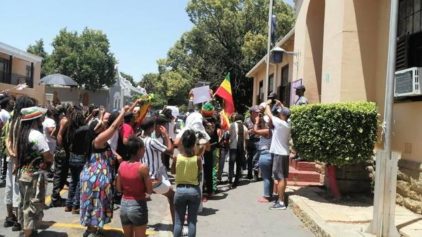
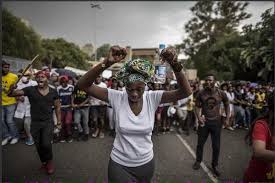
 The likes of the widespread student protests seen across South Africa this week have not been seen since students led the opposition to apartheid. The key difference is this generation of youngsters were born after the 1994 democratic elections that ushered in Nelson Mandela as South Africa’s first president, and they’re online.
The #FeesMustFall hashtag has become a rallying cry for these protests, in what South Africans are calling “South Africa’s education Arab Spring”. The hashtag accounted for about 300 tweets per minute on Friday morning, as social media was flooded with support from South Africans weary of the corruption that has dogged the ruling party and which now threatens the Constitutionally-enshrined principle of free education. Protestors converged on the Union Buildings — the seat of government — in the capital Pretoria, on Friday.
Like the Arab Spring, students – known as “born frees” — are uploading pictures and videos from the front lines of the protest to social media, while Twitter TWTR +0.00% is being used to get food and supplies to them. There are initiatives to buy students airtime so that they can continue to document their protests – which are a microcosm of the country’s general frustrations at how South Africa’s hard-won democracy has unravelled as corruption has become increasingly commonplace and election promises about housing, education and access to basic services have not been fulfilled by the ruling African National Congress (ANC).
Student protest in South Africa has a poignant history. In 1976, a student demonstration in Soweto against black children being forced to study in Afrikaans, a language many didn’t speak, led to the shooting of Hector Peterson. A photograph of the dying Peterson being carried from the scene became the key image of these protests, as Peterson became the icon of the struggle against apartheid.
Read more at www.forbes.com