Jedidah Isler
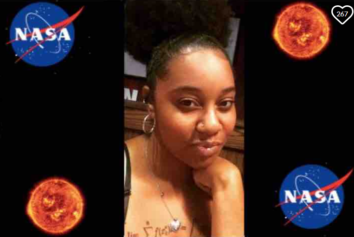
Jedidah Isler became the first Black woman to receive a PhD in the field of astrophysics from Yale University in 2014.
In her academic career, she has focused her energy on researching black holes and blazars, or blazing quasars. Last year, Isler completed her award-winning study that examines the physics of particle jets emanating from black holes at the centers of distant galaxies. This study made her a star in the world of astrophysics.
“I look at the data. I plot the intensity of light vs its wavelength. We measure how much intensity is produced at each wavelength. There’s a characteristic two-peaked spectrum… You get to measure time variability. Did the peaks go up or down together or independently? If they don’t go up and down together, it’s very unlikely you have co-spatial emissions,” says Isler in an interview with Wired.com.
In just a few years, she has began to use her platform and success story to inspire young women of color to pursue careers in science, technology, engineering, and mathematics (STEM). Isler has been a TED fellow and hosted her own TED Talk. She was also a Syracuse University Chancellor’s Faculty Fellow this year.
Currently, Isler serves as a National Science 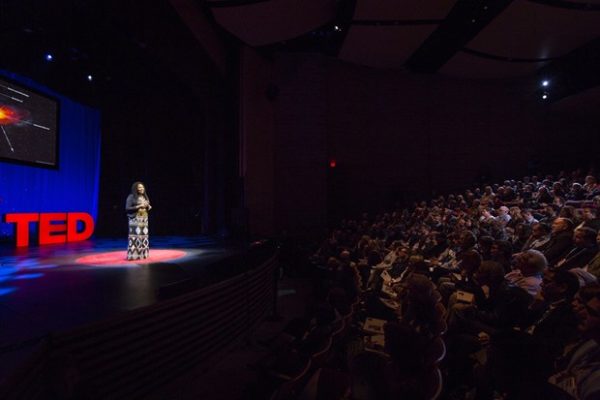 Foundation Astronomy & Astrophysics Postdoctoral Fellow at Vanderbilt University. She also is involved with the Future Faculty Leader program at Harvard University’s Center for Astrophysics. In addition to her work in academia, she serves as a member on the American Astronomical Society committee on the status of minorities in astronomy that aims at addressing the diversity issues in many STEM careers.