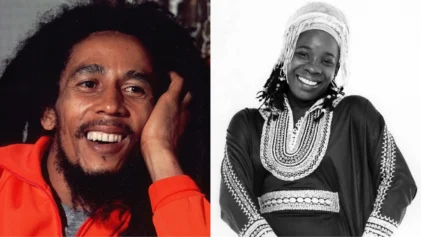
 Marlon James became the first Jamaican winner of the prestigious Booker Prize for fiction Tuesday with a vivid, violent, exuberant and expletive-laden novel based on the attempted assassination of Bob Marley.
Michael Wood, chairman of the judging panel, said “A Brief History of Seven Killings” was “the most exciting book on the list” and a novel full of the “sheer pleasure” of language. He said it had been the unanimous choice of the five judges.
James was awarded the 50,000 pound ($77,000) prize during a black-tie dinner at London’s medieval Guildhall. The 44-year-old author said he almost gave up writing more than a decade ago when his first novel, “John Crow’s Devil,” was rejected by 70 publishers. He said winning the Booker Prize was “surreal,” and joked that he would spend the prize money on a tailor-made suit or “every William Faulkner novel in hardcover.”
He said he hoped his victory would bring “more attention to what’s coming out of Jamaica and the Caribbean, because I think there are some brand-new voices coming out who are exploring contemporary society, who are exploring what’s beyond politics, what’s beyond colonialism.”
“A Brief History of Seven Killings” charts political violence in Jamaica and the spread of crack cocaine in the U.S., and hinges on a 1976 attempt on the life of reggae superstar Marley — identified in the book only as “The Singer.” The story is told in a cacophony of voices — from gangsters to ghosts, drug dealers to CIA agents — and in dialects ranging from American English to Jamaican patois.
James, who teaches creative writing at Macalester College in Saint Paul, Minnesota, said he saw the book as “a novel of exile.”
He said distance from Jamaica had given him “a certain courage to go into topics like violence and the aftermath of violence and sexuality. … I think I needed that distance and I needed that perspective.”
Critics have compared the novel to the stream-of-consciousness novels of William Faulkner and the hyper-violent movies of Quentin Tarantino, while James has cited Charles Dickens as an influence on his multi-character depiction of society.
Read more at washingtonpost.com