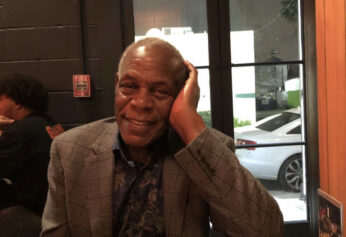
LAGOS, Nigeria (AP) — U.S. actor Danny Glover said Thursday that he is in Nigeria to star in a movie based on people who risked and sacrificed their lives to stop the spread of Ebola in Africa’s most populous country.
Glover said he is proud to take part in the film, called “93 Days,” because of the achievements made by the real-life characters. Nigerian actress Bimbo Akintola will portray Dr. Stella Ameyo Adadevoh, who along with her team diagnosed the first Ebola case in Nigeria.
Adadevoh put the patient under quarantine, and stubbornly refused to discharge the Liberian man who was sick with the infection despite pressure.
Adadevoh eventually died along with three other hospital staff that had contracted the disease. Her actions ensured that the fast-spreading viral infection was quickly contained.
Glover will portray the director of the hospital where Adadevoh worked.
Akintola said the movie is a story of how Nigeria— a country where many institutions have weakened due to endemic corruption and ethnic strife — triumphed over the spread of Ebola, which ravaged her West African neighbors of Guinea, Sierra-Leone and Liberia.
“Nigeria is Africa’s most populous country and its newest economic powerhouse. For a disease outbreak, it is also a powder keg. The number of people living in Lagos — around 21 million — is almost as large as the populations of Guinea, Liberia and Sierra Leone combined,” WHO said last year in a publication about the outbreak.
Lagos also is characterized by a large population living in crowded and unsanitary conditions in many slums, it said.
Thousands of people move in and out of Lagos, Africa’s largest city, every day, constantly looking for work or markets for their products in a busy metropolis with frequent traffic gridlocks, said WHO, adding that officials were worried how they would manage to trace people who had come into contact with persons infected with Ebola in order place them in isolation.
“The last thing anyone in the world wants to hear is the two words, ‘Ebola’ and ‘Lagos’ in the same sentence,” said WHO, quoting Jeffrey Hawkins, the United States Consul General in Nigeria at the time.
Read more at yahoo.com