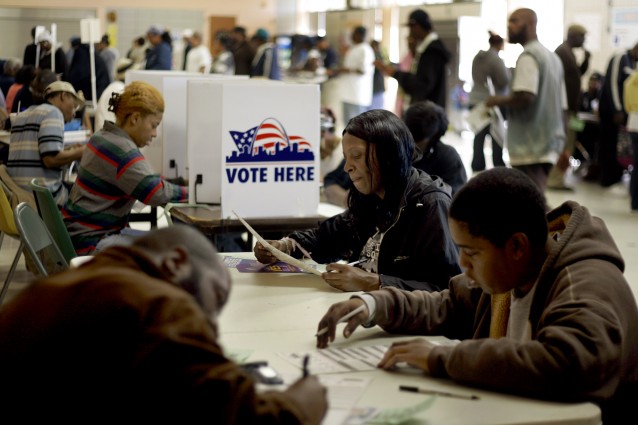
 Black voters could have a major say in who eventually gets the Democratic presidential nomination. Alabama, Arkansas, Georgia, North Carolina, Oklahoma, Tennessee, Texas and Virginia, all have early primaries in the spring of 2016. Many of these states have large Black populations.
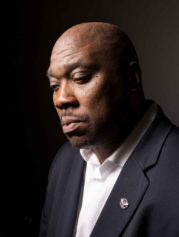
“There’s definitely an opportunity for African-American voters to exert their influence over the process because of the states that are at the top end of the primary cycle now,” said Michael Tyler, the Democratic National Committee (DNC)’s director of African-American media and Southern regional press secretary.
New York State Democratic Party Executive Director Basil Smikle, a former Clinton aide, says that early voting in states with large Black populations has forced candidates to get a jump on addressing Black issues.
“You’re seeing candidates speak to issues in communities of color, particularly African-American issues, earlier than they probably would have years prior,” said Smikle in an interview with The Daily News.
Former first lady and secretary of state Hillary Clinton is the Democratic frontrunner, but she hasn’t got the Black vote sewn up, even though Black people overwhelmingly support the Democratic Party. Clinton has a contentious relationship with Black Lives Matter (BLM) activists, who have accused her husband, former President Bill Clinton, of supporting policies which encouraged the mass incarceration of Black men.
The BLM activists were not happy with Clinton’s responses during an impromptu meeting in New Hampshire.
“She was very defensive,” said activist Ellie Hearns appearing on CNN. “She was very intentionally suggestive of what other people could do as opposed to what she specifically could do. She was challenged to change hearts and minds and she said she doesn’t believe in that and, so that is, a majority of the time, the reaction that we’ve seen from the progressive movement towards these calls to action.”
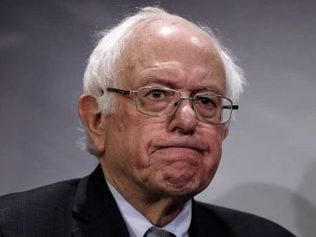
The other Democratic candidates have also made missteps with Black Lives Matter activists. Former Maryland governor, Martin O’Malley, has faced criticism for the harsh policing policies he oversaw while he was mayor of Baltimore, and Vermont senator, Bernie Sanders, was interrupted by BLM activists while trying to make a campaign speech in Seattle.
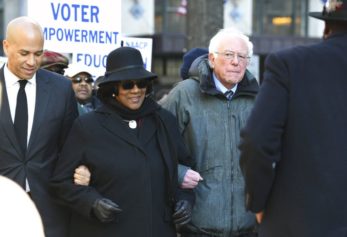
Realizing the importance of the Black vote, Democratic candidates have retooled their messages. Sanders appointed Symone Sanders, a Black social justice activist, to be his national press secretary, and he also posted a racial justice manifesto talking about the problem of mass incarceration, the militarized police and the failure of the War on Drugs, on his campaign site. However Sanders, who campaigned for desegregation in the 1960s, has been talking about these issues for a long time.
Democrats shifted their tone to clearly address Black issues during a meeting last week in Minneapolis. During the invocation, Rabbi Adam Latz, said, “we’ve replaced Jim Crow with mass incarceration.”
Clinton also mentioned “Black lives matter” during her speech to the Democratic National Convention. This has become a recurring part of her campaign speeches. She also criticized Republicans for failing to end mass incarceration and trying to curtail voting rights. The DNC also passed a resolution making “Black lives matter” part of it’s official party platform.
“The DNC joins with Americans across the country in affirming ‘Black lives matter’ and the ‘say her name’ efforts to make visible the pain of our fellow and sister Americans as they condemn extrajudicial killings of unarmed African American men, women and children,” the resolution stated.